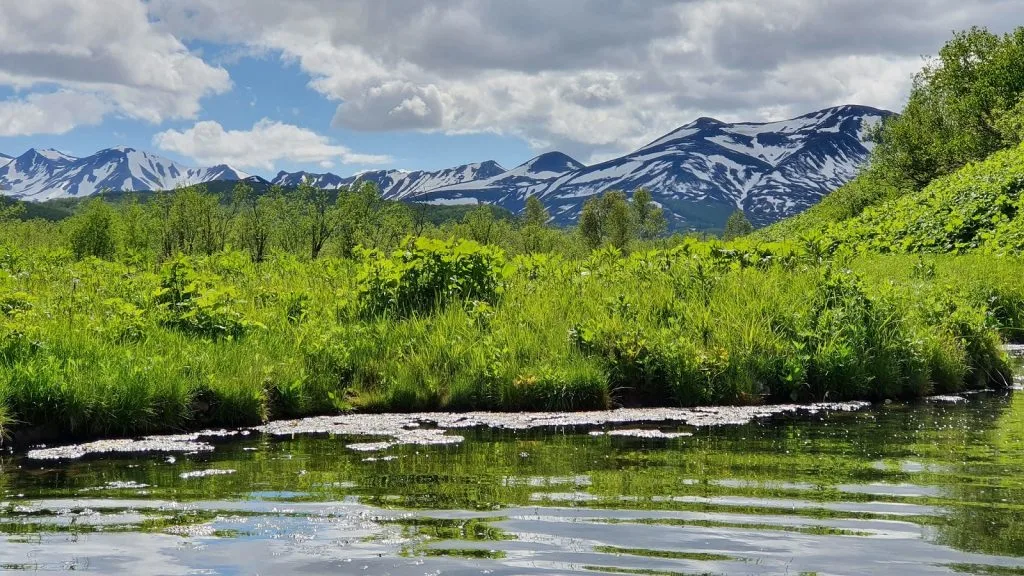
As sad as it is, the pandemic continues, and along with it, restrictions on travel around the world continue as well. Many plans have been postponed or revised, and some have been canceled altogether. Since Europe is still officially unclear for now, I decided to look toward the east of Russia. If you think about it, this is a unique opportunity to travel around the country and see its beauty.
Right now there are excellent options and offers both from airlines and hoteliers. And if you have a long vacation, this is exactly the kind of domestic Russian adventure you can devote it to.The Russian Far East had long attracted me with its wild nature and extraordinary views. Some time ago I had already been considering flying to Sakhalin and Kamchatka to see everything with my own eyes — what is it really like there? Rough planning showed that the trip would most likely require a lot of time, money, and detailed logistics, that good infrastructure should not be expected, and that the flight would be long.This year everything came together — the impossibility of traveling to most of the countries I had planned to visit, having vacation time, and having a great group of friends with similar wishes and interests. And when we started thinking seriously about the route, we came up with several ideas that turned the original plan upside down and made the trip even richer and more interesting. Of course, we started making plans and buying things about half a year before the trip itself.The key point was that we decided to отказаться from a long direct flight. Surprisingly, during the season it can be more expensive and forces you to focus on just one distant destination. Now there are quite a lot of routes and offers from different airlines to the Far East with many intermediate stops. We thought: what if we also see something at those stops, make long overnight layovers there? Everyone liked this idea.We paid attention to S7 and its discount offers for domestic regional flights. On the airline’s website you can build a complex route based on current promotions and prices. We started estimating the legs through all the major cities and in the end came up with this inexpensive route: Moscow - Krasnoyarsk - Vladivostok - Petropavlovsk-Kamchatsky - Irkutsk - Moscow. That’s the one we settled on as the most выгодный. Especially considering that the baggage fare cost only slightly more than Aeroflot’s regular baggage fare on a direct flight to Petropavlovsk-Kamchatsky.Tip one: check the weather. We flew in June and understood that while Moscow, Krasnoyarsk, and Irkutsk would most likely greet us with heat or warm weather at that time of year, Vladivostok would probably be cool. Petropavlovsk-Kamchatsky would definitely be cold, and with the mountains — snowy and rainy. So from the start we decided we needed a baggage fare and would have to bring warm (and even winter) clothes.Tip two: you can spend fewer days in the cities, but nature may require flying weather. So it’s better to allow more days for Petropavlovsk-Kamchatsky. Based on this, our plan became: 1–2 days in Krasnoyarsk, 1–2 days in Vladivostok, 5 days in Petropavlovsk-Kamchatsky, and 2 days in Irkutsk. In the end, the tour came out to just about two weeks.So the flights are planned (and you shouldn’t wait too long to buy either — prices change constantly), but what next? Next you need to decide what to see and where! And here it really is worth reading a bunch of forums and articles in advance, and generally checking top attraction lists for all the places you expect to visit. There are plenty of options — from finding ready-made tours (more expensive) to finding private guides through Tripster or Avito and putting together your own custom plan. I was lucky to have such active friends; we rather quickly decided what we wanted to see and visit.Tip three: find a top list of sights for each place and think about what interests you most. Because most likely you either won’t manage to see everything, or you’ll have to sacrifice one thing for another. You need to accept this fact and focus on what interests you personally. For example, we immediately understood that we wouldn’t have enough time for Olkhon on Lake Baikal. It seems like you should go, and it’s popular, but it would take all our time and energy, while we would see very little and simply spend a huge amount of time on the road. The question is: is it worth it? We decided it wasn’t and came up with a different program that we were very happy with.Tip four: it’s better to message, book, and confirm everything in advance, ideally a couple of months ahead. The Far East has limited tourism resources; it’s not a megacity, and many jeeps, boats, and hotels may already be booked several weeks in advance. To avoid wasting time and frantically looking for alternatives, it’s better to arrange things beforehand.As for accommodation, everything is fairly simple because there are plenty of 3*–4* level hotels in all major cities. Our experience over the last two years has shown that if you stick to chains like Holiday Inn, Novotel, Ibis, and Azimut, there are no problems. The hotels are usually new, affordable, and have good breakfasts. The service is solid — I can confirm that from personal experience.But in Petropavlovsk-Kamchatsky, it’s worth paying attention to apartments. The city is small and old, all the hotels have a somewhat Soviet feel, and they are sold at very non-Soviet prices. Our conclusion is that hotels in this city are not worth the money they ask, while apartments are quite decent. So this is a place that should immediately be considered with private accommodation in mind. As for booking, the same www.booking.com and similar websites have long been well known to our compatriots, and finding an option that suits you will not be difficult.Tip five: the “Mishustin cashback.” Don’t forget that right now we have a unique opportunity to get state discounts when traveling around Russia! To do this, you need to pay with a MIR card and make bookings on special Russian websites such as https://bronevik.com. You can choose a hotel on any website, but then check how much it costs on a promotional site, whether it has the “cashback when paying with a MIR card” icon, and then, if you use it, after some time you will get up to 20% of the cost back to your bank account. We now actively use this for all trips around Russia, and it really works. However, the program is periodically updated and its timing/conditions change, so you need to read what you can benefit from for a specific period and required number of nights.Check the current offers on the website https://mironline.ru/ — news about new opportunities appears there constantly.I think many people who read this article will say, “You should have gone here instead!” Oh, “You should have seen this…” Yes, we should have! But there isn’t enough time for everything, so we chose what seemed most interesting to us from the descriptions and photos. This is our view and our desire. I’m sure the itinerary could be improved many times over, and you will definitely manage to do that!
Day 1.
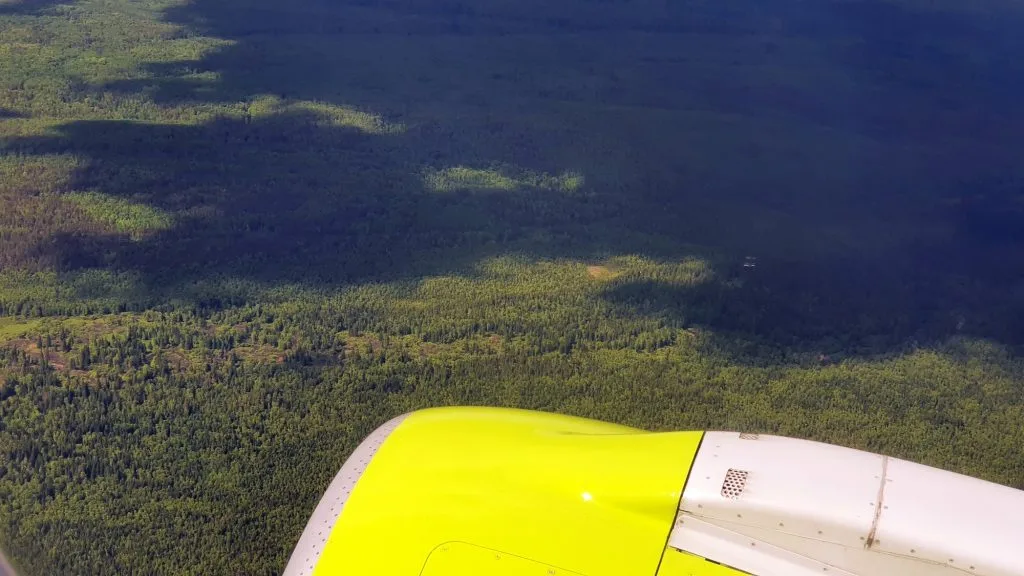
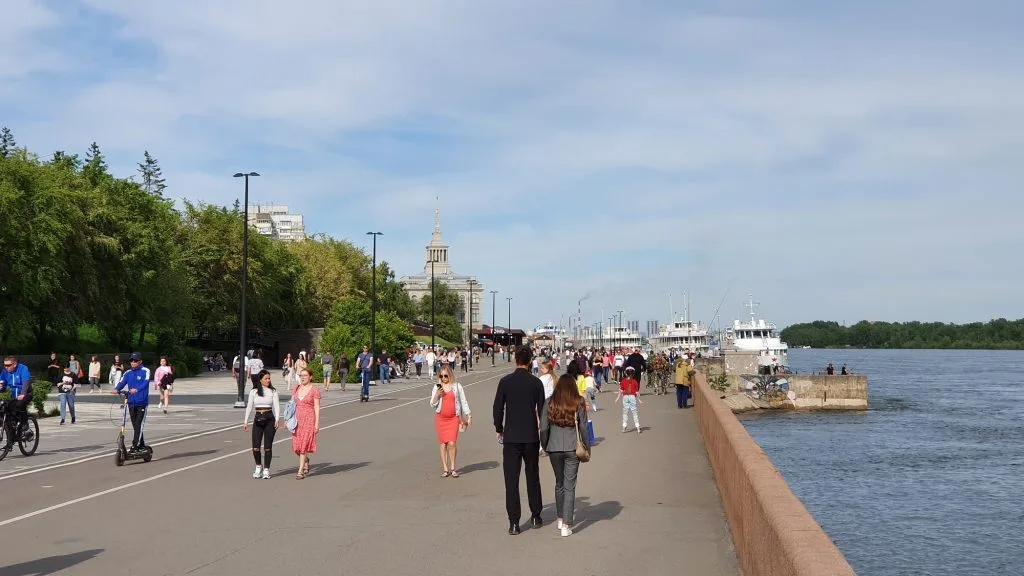
We arrived in Krasnoyarsk early in the morning, having managed to sleep a little on the plane. At dawn it became clear that the “green sea of taiga” is not some abstract phrase, but a very real fact. As you approach for landing, you can see a green hilly fabric of forest stretching all the way to the horizon. And in places it isn’t cut through by roads or power lines — just forest… forest… forest. At that moment, more than ever, you feel just how huge our country is, how boundless, that you can fly for hours and meet no one and nothing below.In the morning the hotel was not yet ready to check us in, but we left our things there so we could immediately start walking around the city. A tip for the future — you can always leave suitcases in storage lockers at train stations. If you use apartments and there is no place to leave your things, then when arriving early in the morning you can leave your suitcase at the station and pick it up before check-in. Of course you’ll have to make an extra trip, but you can spend the whole morning walking around unencumbered.First we went to the V.I. Surikov Krasnoyarsk Art Museum. It is small, but thanks to the Soviet distribution system there are several interesting paintings by well-known artists. I recommend ordering a tour right at the ticket desk. It’s inexpensive, but the visit becomes many times more interesting. The museums are small, so it won’t take much time.Then it’s worth visiting the Krasnoyarsk Regional Museum of Local Lore; there is quite a lot of interesting stuff there, and the building itself is unusual and worth photographing. From there you can go down to the Yenisei embankment and take a walk there.For dinner I highly recommend the restaurant Boho (94 Uritskogo St.) — we were satisfied on every point. I want to specifically note this little restaurant here.
Day 2.
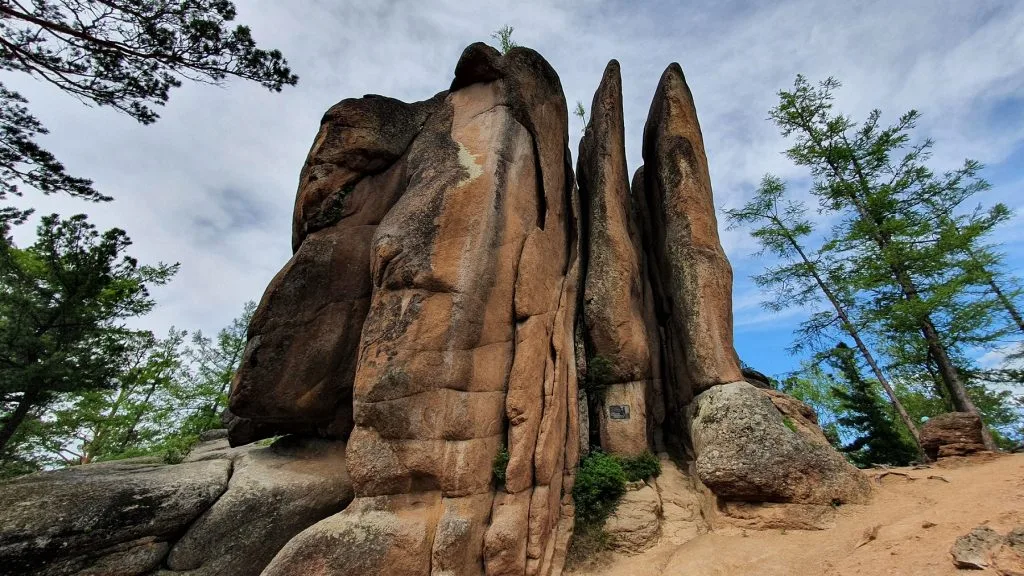
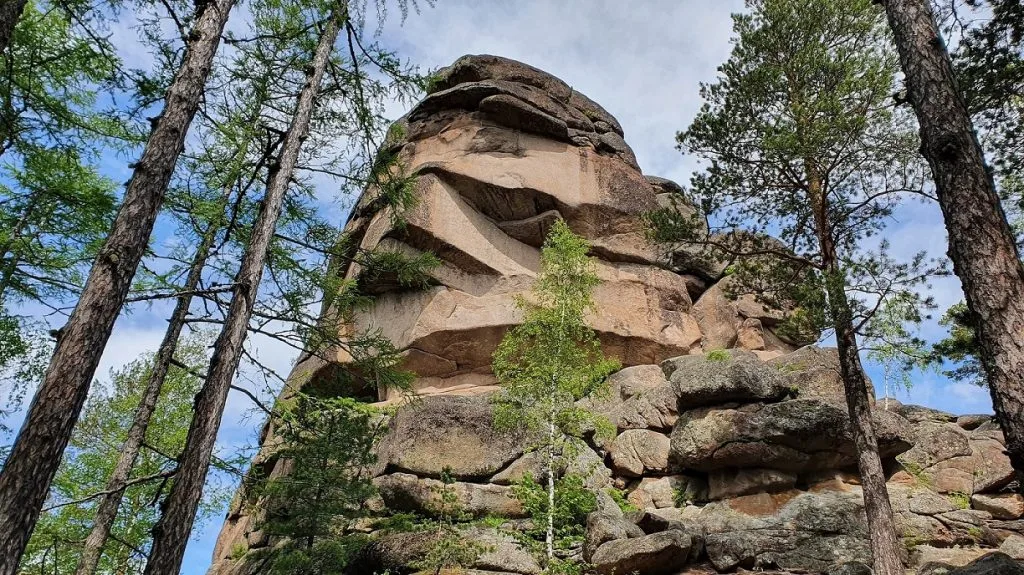
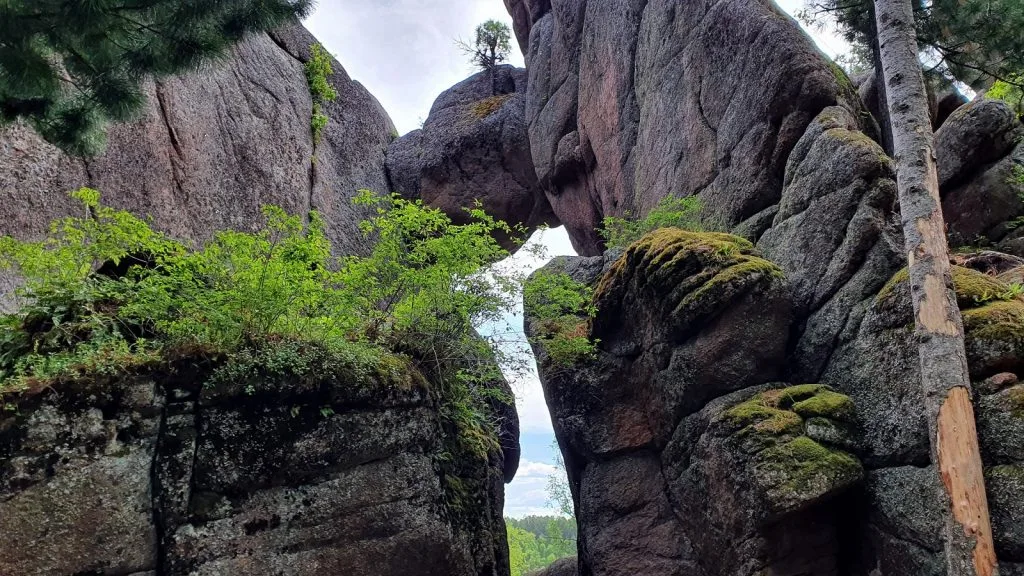
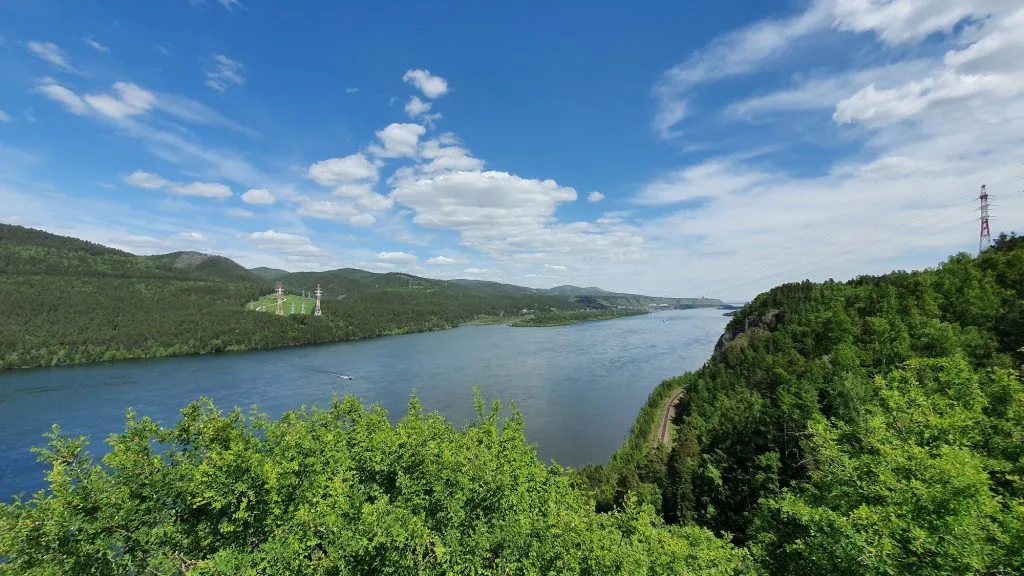
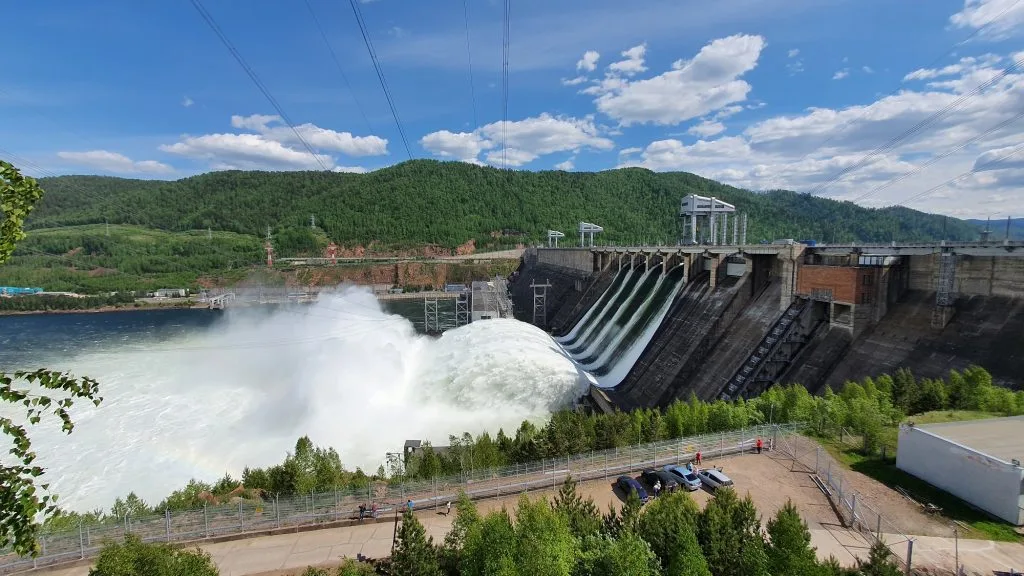
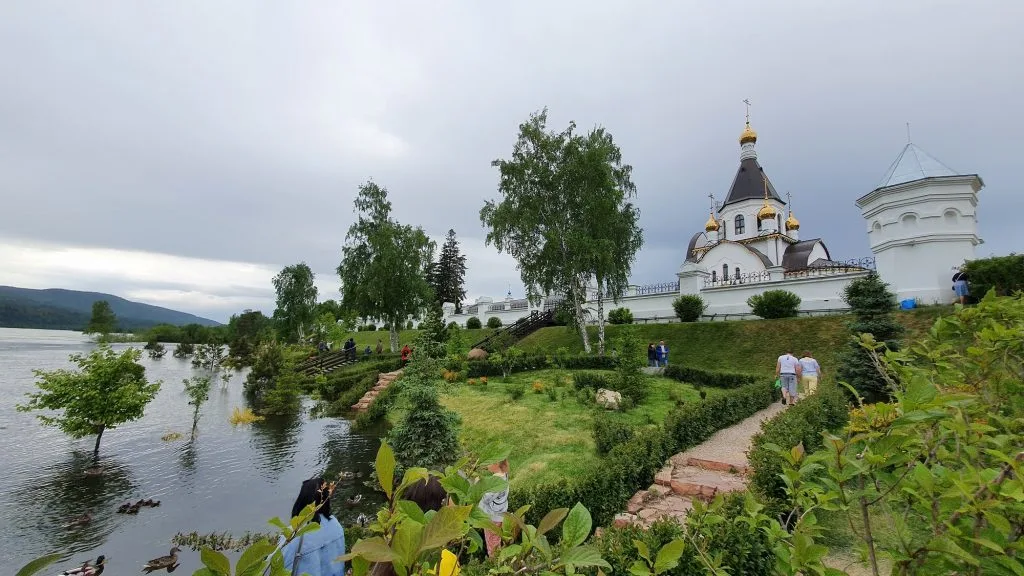
Let’s leave Krasnoyarsk’s environmental problems aside, because it is famous for something entirely different — its rocky national park. “Krasnoyarsk Stolby” is a national park in Krasnoyarsk Krai on the northwestern spurs of the Eastern Sayan, bordering the Central Siberian Plateau. It has been proposed for the UNESCO World Heritage List. These are rocks with stunning views and unique landscapes. While walking in the park, there is an opportunity to climb to the top of some rocks, but most are accessible only to professionals with the proper equipment. We booked an excursion on the official website — https://kras-stolby.ru/tourism/#route. And then additionally arranged this route for the day: Krasnoyarsk Stolby + the village of Ovsyanka / Divnogorsk + Krasnoyarsk Hydroelectric Station + Uspensky Monastery.The village of Ovsyanka / Divnogorsk are more like intermediate points with wide views of the Yenisei and the hills. The road here is very scenic; in many places it is worth stopping just to admire the endless sea of taiga and the breadth of the river.The Krasnoyarsk Hydroelectric Station (named after the 50th anniversary of the USSR) is a hydroelectric power plant on the Yenisei River, part of the Yenisei cascade and its third stage. It is Russia’s second most powerful power station after the Sayano-Shushenskaya HPP. The Krasnoyarsk hydro complex includes the only ship lift in Russia.It is a huge and majestic structure, and the ship lift is astonishing for the boldness of both the idea and its realization. We were also lucky to catch the unique period when water was being discharged from the reservoir, although this happens extremely rarely. The spectacle is simply mesmerizing. I’ll add that the best views open from the left bank, from the hill. There is a small road there that lets you drive almost to the top of the dam, and then it’s worth walking a little farther downstream beyond the fence. There the cliff begins, nothing blocks the view, and before you the hydroelectric station and the Yenisei appear in all their glory!The Uspensky Monastery is a well-known local attraction, but at the same time it resembles all the other monasteries in Russia. We visited it at the end of our day and looked at the landscaped park nearby, which, unfortunately, was somewhat flooded because of the water discharge at the hydro plant.
Day 3.
Here we had a small mishap, because we were supposed to fly direct to Vladivostok, but the flight was canceled. Of course, the airline informed us in advance and rebooked us onto a connecting flight via Novosibirsk, where we had planned to walk around for a few hours. But unfortunately, the first flight was delayed and we missed the connection. So this day was devoted to a morning walk around Krasnoyarsk, admiring the Yenisei, food, and airports. By evening we arrived in Vladivostok, checked in, and went to sleep.After several trips around eastern Russia, I want to say that local airports have many interesting shops where you can buy pine nuts, various kinds of candy and chocolate with local fillings, herbal teas, wooden crafts, and much more that can be considered gifts of Siberia. Unfortunately, in the cities themselves, even in large department stores, I did not find the same goods and/or their equivalents (usually things are cheaper in the city). So if you want souvenir sweets and similar things, it’s worth looking for them in airports right away. Prices are more or less the same.As for nuts and herbs/teas, we ended up buying them in Buryatia when we were in Irkutsk. There it was significantly cheaper and the selection was bigger. So if you want to buy something like that, it’s worth estimating in advance where it’s better to do it.
Day 4.
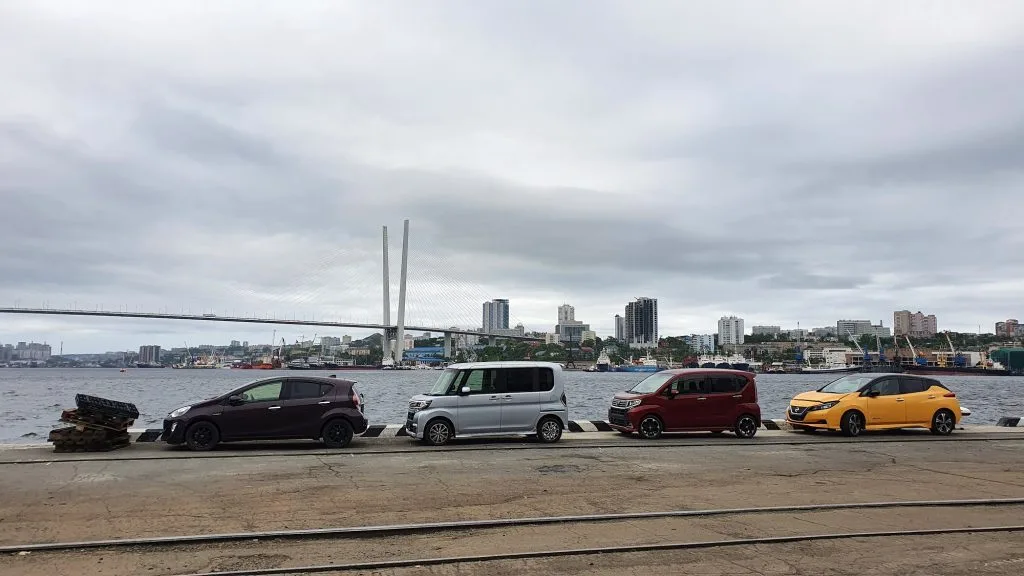
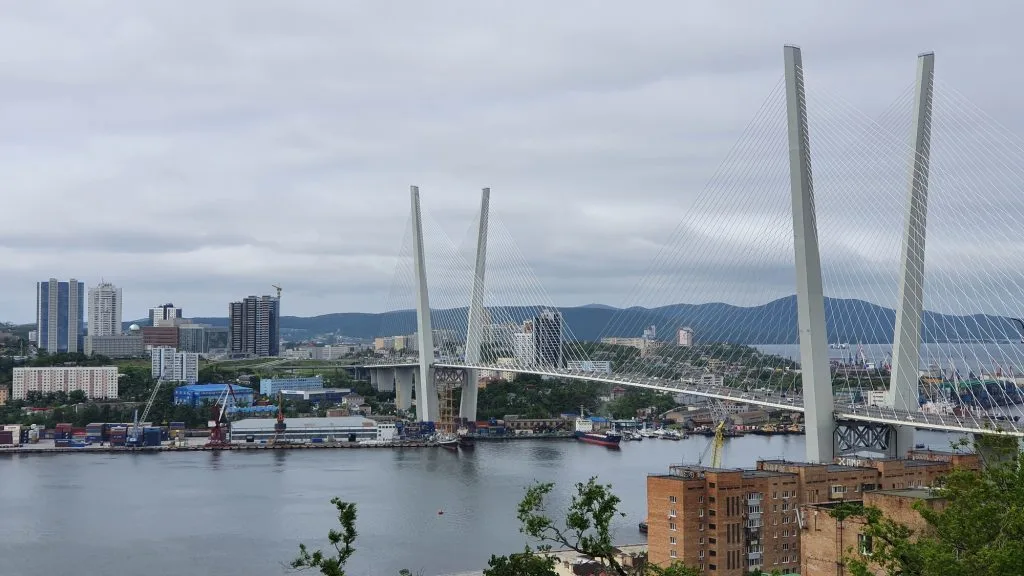
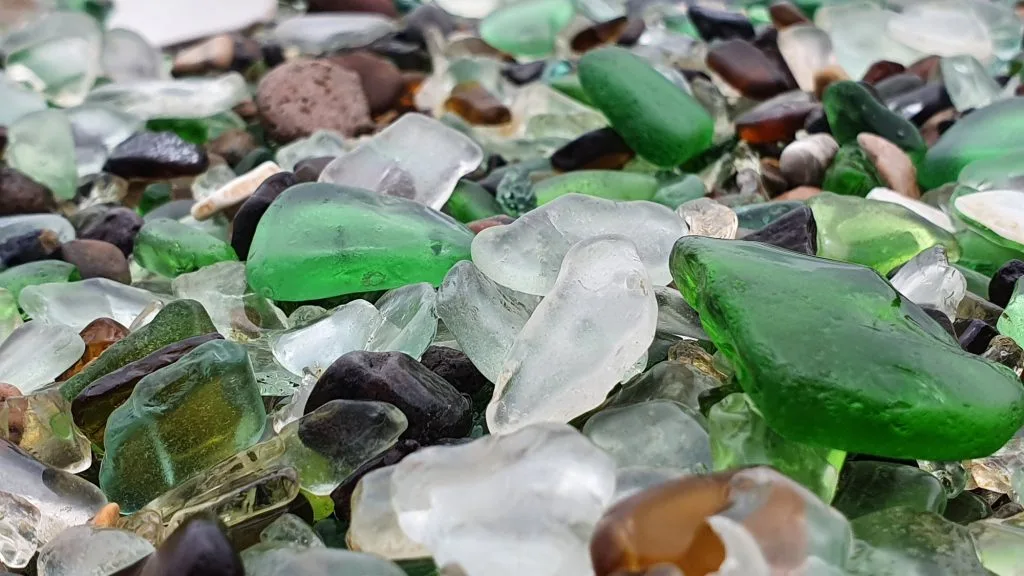
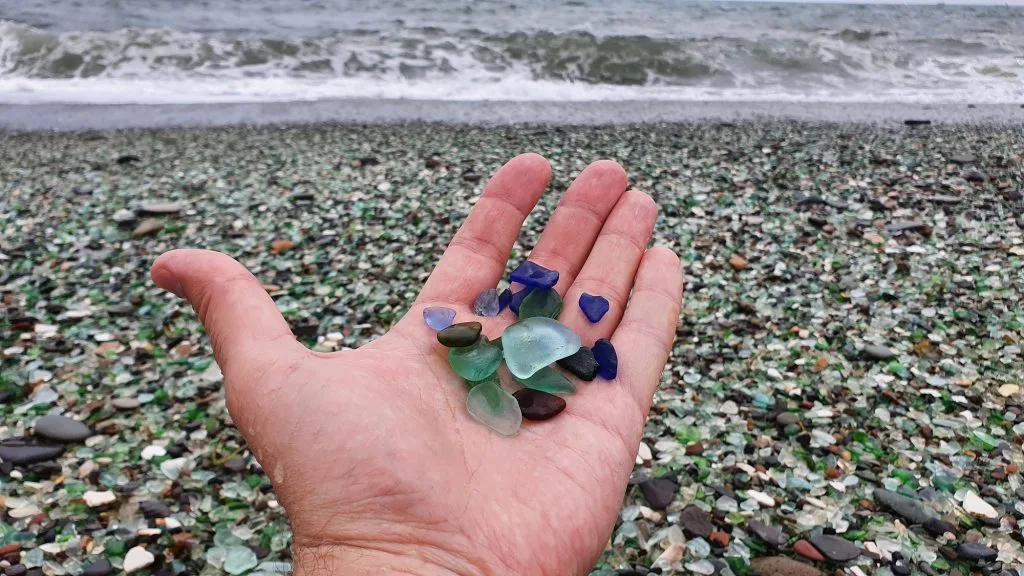
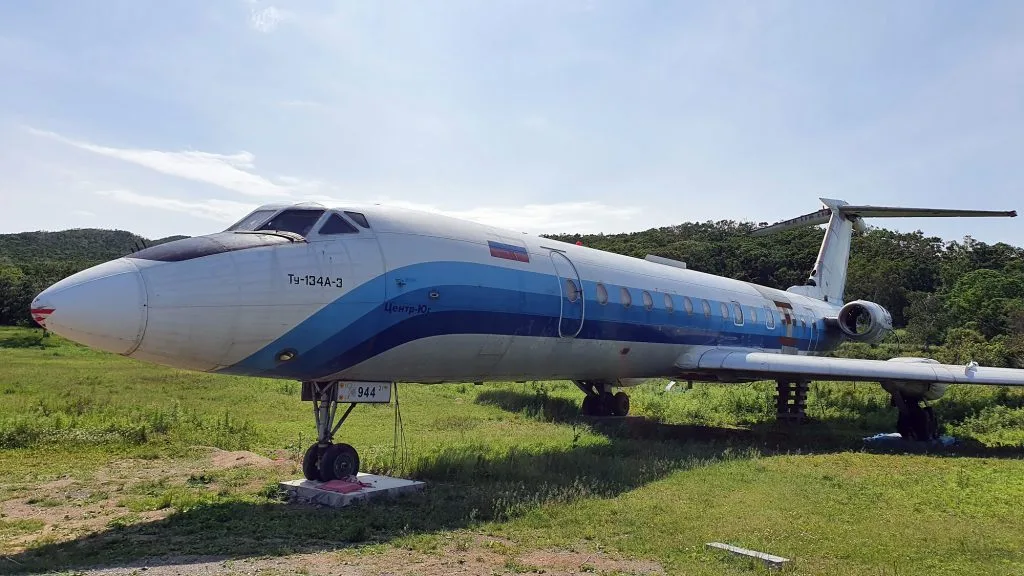
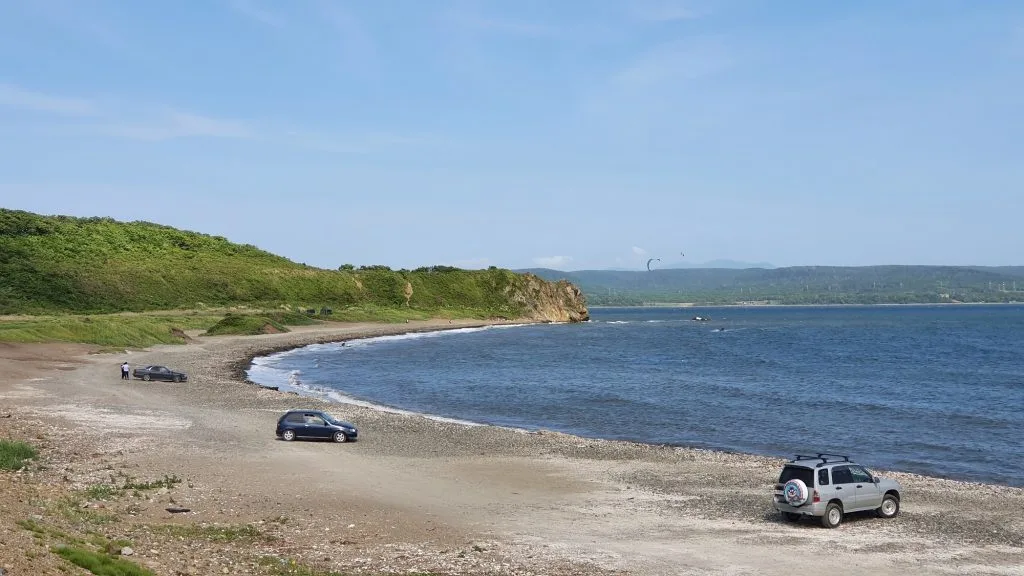
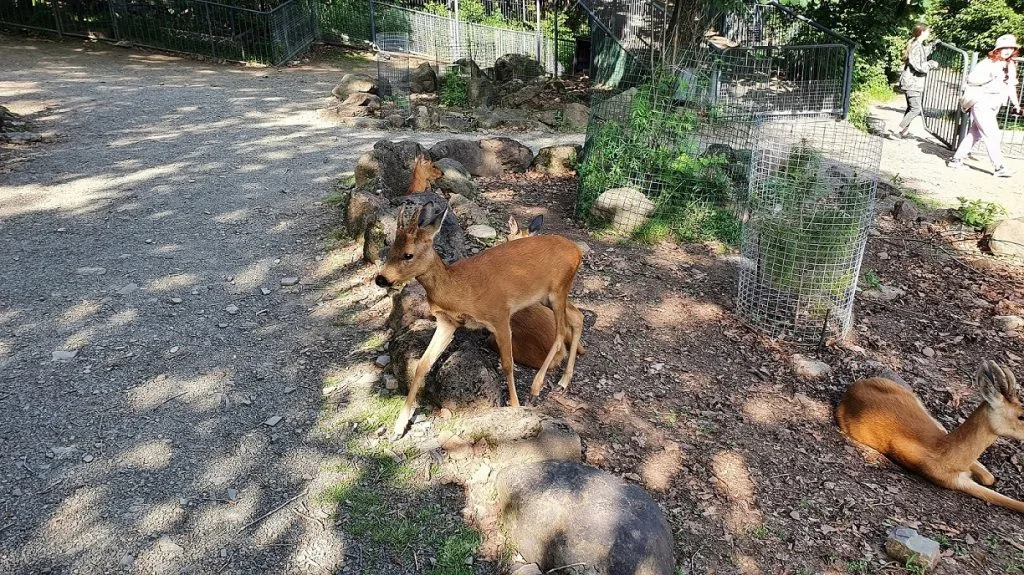
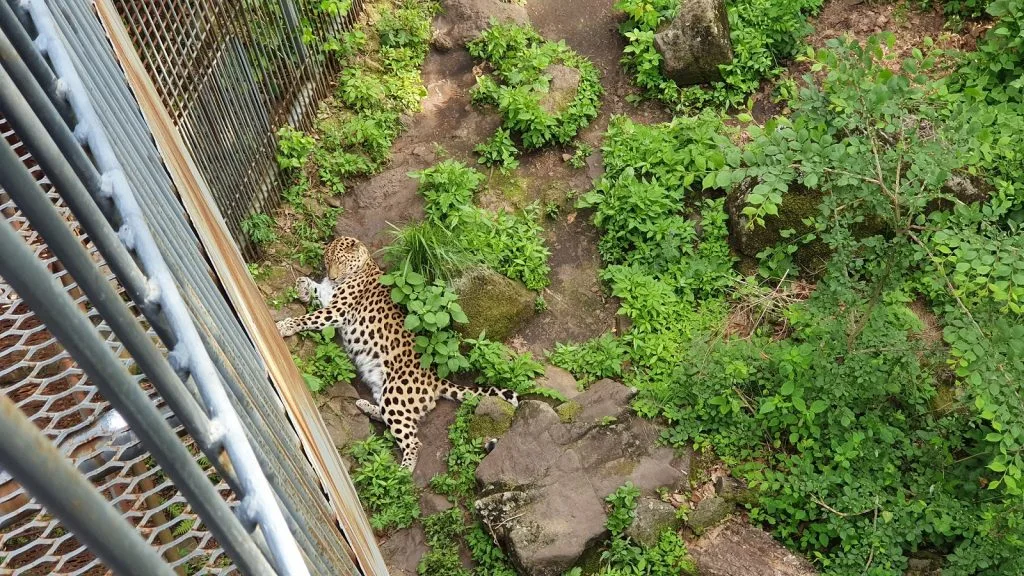
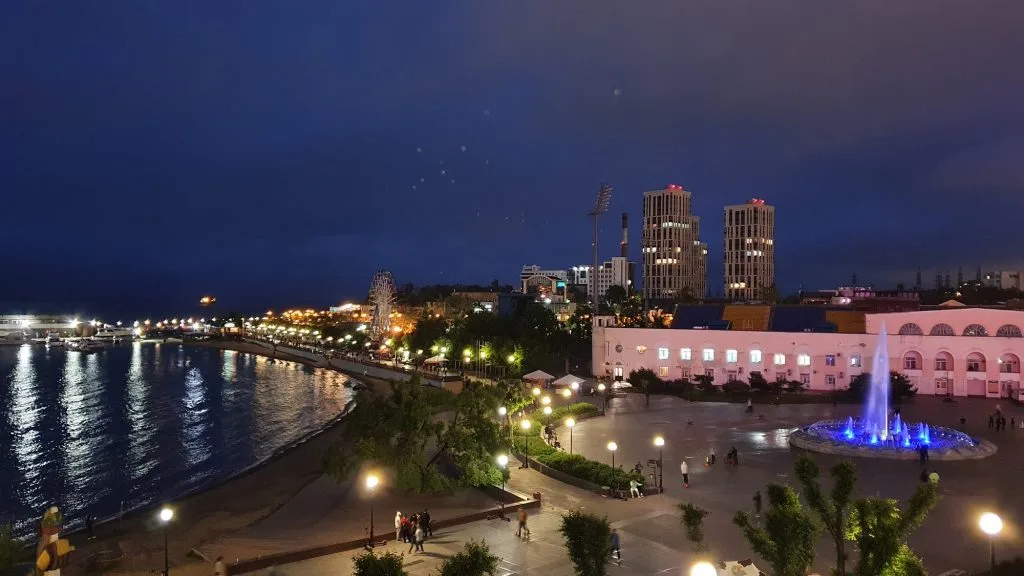
Traditionally, we began our look at Vladivostok with the Primorsky State Art Gallery and continued with a walk through the port and the central streets of the city.The port is certainly a strange place, more industrial than anything else, but still very interesting for an ordinary city resident. The city has notes of southern seaside towns and somehow also resembles Istanbul and something else at the same time. Everything all at once. It is very lively and very unlike other Russian cities.The famous bridges give it a strange appearance — they tower above the bay, above the houses, and above the port. Unusual, unfamiliar, and somewhat inconvenient because of that. But extremely interesting.The most famous is, of course, the Golden Bridge — a cable-stayed bridge across the Golden Horn Bay (not only visually but even by name Vladivostok recalls Istanbul). It is one of the city’s main landmarks. It was built as part of the program to prepare the city for the APEC summit and opened in 2012.Through the website https://tripster.ru/ we found a guide named Yulia and arranged an excursion called “Three Enchanting Bays: Shamora, Glass, and Muravyinaya.” As I already noted, we were satisfied with all the guides and excursions, so I can confidently recommend them all.Glass Bay is filled with pieces of polished glass — a kind of multicolored pebble beach. From afar it looks like just another bay, but up close you realize that the sand is really a patchwork quilt of blue, green, white, and brown glass. Unusual, of course, even beautiful. Though partly sad too — after all, this is a consequence of human activity. And if glass is at least somewhat eco-friendly (?), then how much plastic trash is there in the sea? It’s worth thinking about.Shamora Bay is more interesting in good weather — to sunbathe, sit in restaurants, relax. We spent very little time there and moved on.On the way to Muravyinaya Bay you can stop by the casino. Let’s not forget that Vladivostok is also a famous gambling zone. So you have the opportunity to really go wild. There are even hotels at the casino where you can stay for a day or two. But keep in mind that they are somewhat out of the way, and there is really nothing else interesting there. Everything is arranged so that you spend your time inside the casino.This third bay interested me first of all because of the airplane. Yes, yes, a Tu-134 found its final resting place on the beach of this bay. Originally it was supposed to become the reception area of a hotel under construction, but the pandemic slowed all plans, and for now it just stands there abandoned. If you want, you can arrange with security to inspect the aircraft.On the way back we stopped at the Primorsky Safari Park. Tigers, bears, and tame roe deer (I don’t remember the exact species) won’t let you get bored. Entry is timed and by group, so it’s worth checking in advance. The park is quite large; the animals do not live in cages but in large enclosures that you cannot walk through quickly. Personally, I was left with a positive impression, even though I’m not a fan of zoos.
Day 5.
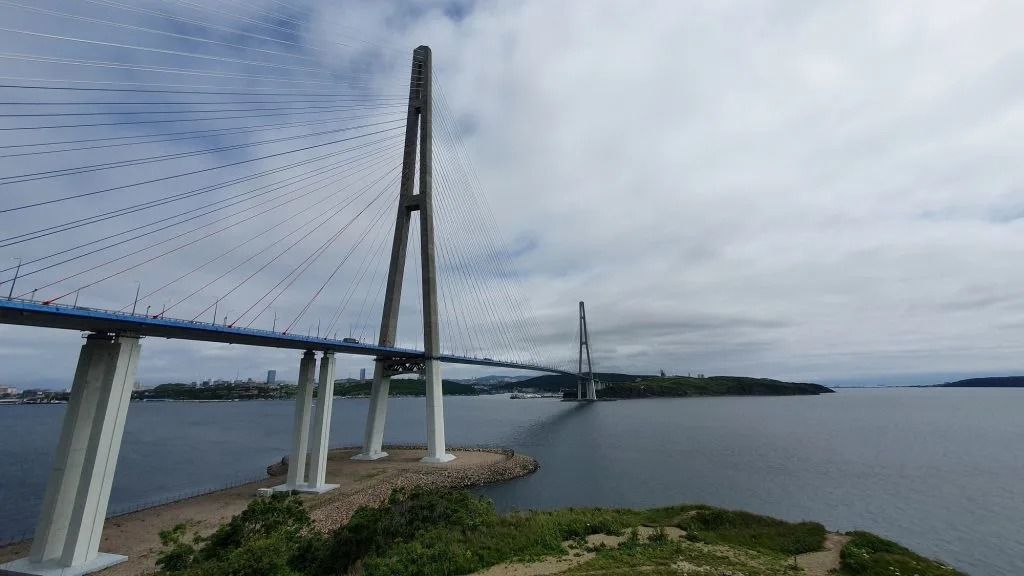
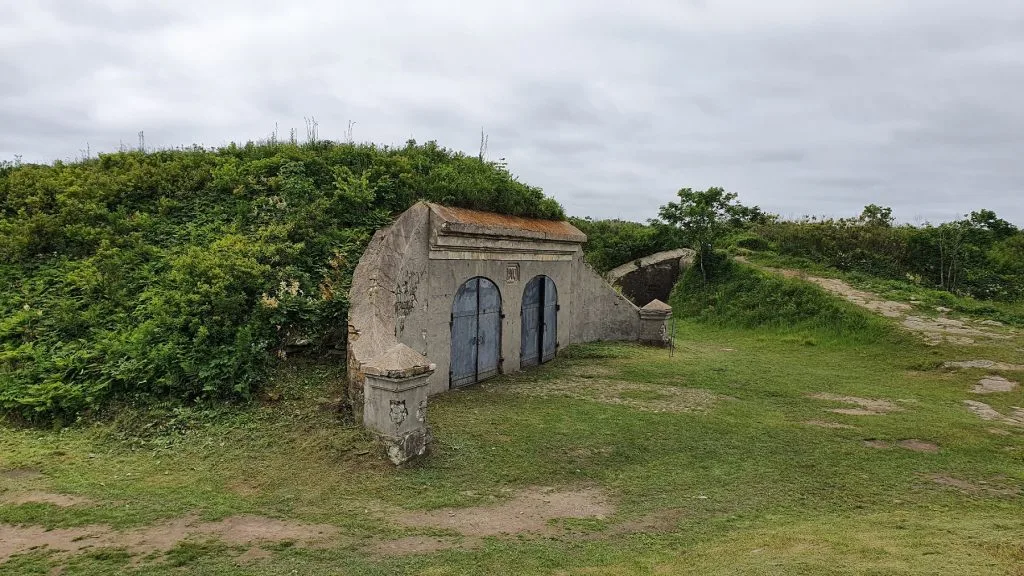
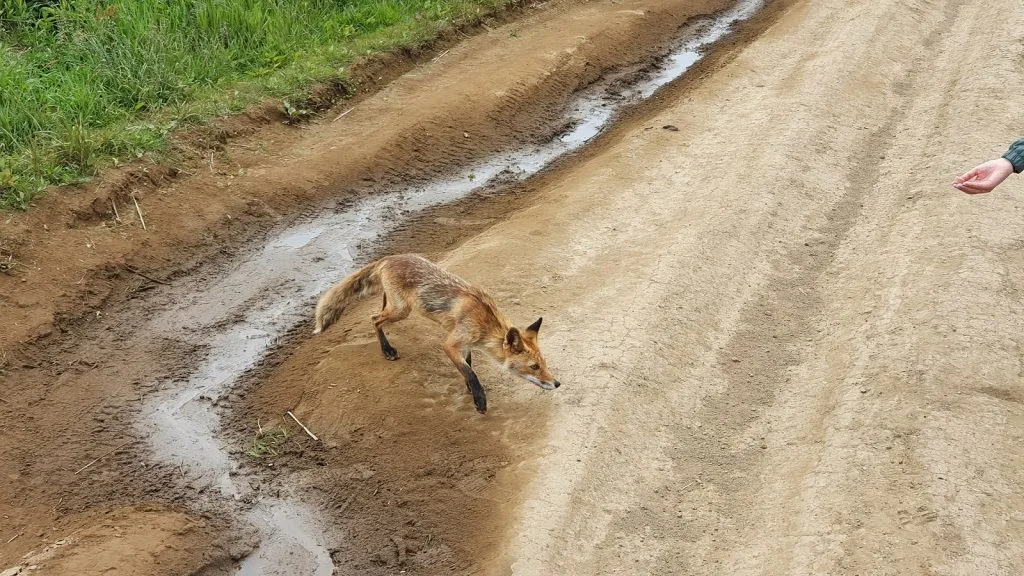
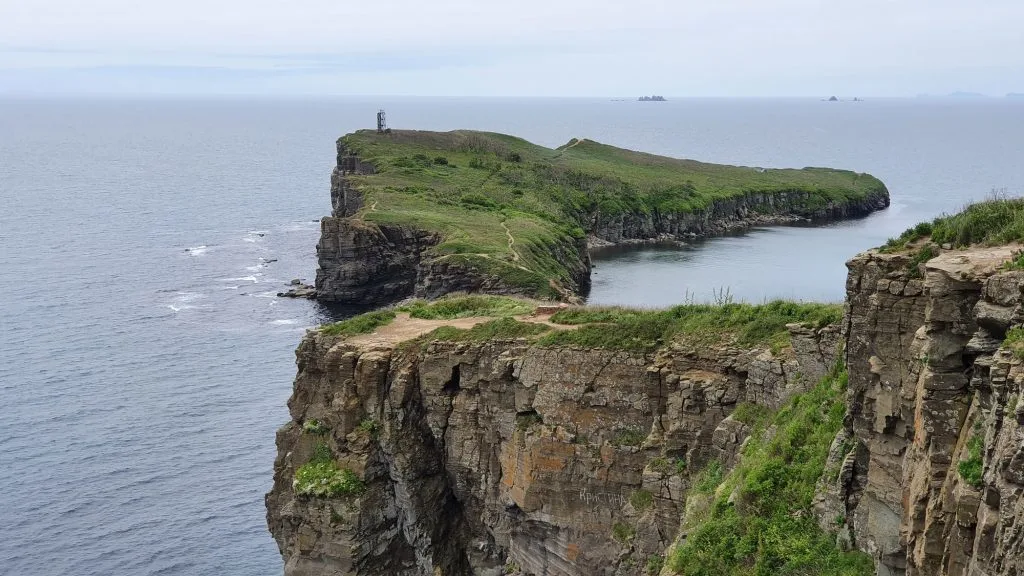
We also hired guide Yulia for another big excursion, “Russky Island and Cape Tobizin” (cable-stayed bridges, Pospelov Fort, Novosiltsevskaya Battery, Cape Tobizin, Rynda café). The sightseeing should begin with the Russky Bridge — a marvel of engineering. In fact, all the bridges of Vladivostok deserve attention: huge and long, they are woven into the city and the landscape. Near its base on the island side are the Novosiltsevskaya Battery and Pospelov Fort. They are small, but well-known tourist spots worth seeing.Next, it is worth driving to the Far Eastern Federal University. It is a huge complex of modern buildings standing on the beach. Students from all over the country and the Far East study there. It is an entire student town on the beach! Impressive.You should also visit the more remote parts of the island, where there are only dirt roads. Note that it’s better to have a good jeep, and if you’re driving yourself, you need to be extremely careful not to get stuck in an ordinary city car. A lot will also depend on the weather. Here nature and foxes rule — they run up and beg for treats. Of course, you shouldn’t touch them — they’re still wild animals — but there’s no need to be afraid either. It’s hard to describe all this — it has to be seen. I can compare it perhaps only with the west coast of Ireland. There is something similar in these landscapes.
In the evening we returned to the city. Here it is worth noting that if you want to eat caviar, crab, scallops, and other seafood delicacies, then you should do it in Vladivostok. As it turned out, in Kamchatka it is significantly more expensive. So evenings in Vladivostok should be devoted to gastronomic delights.
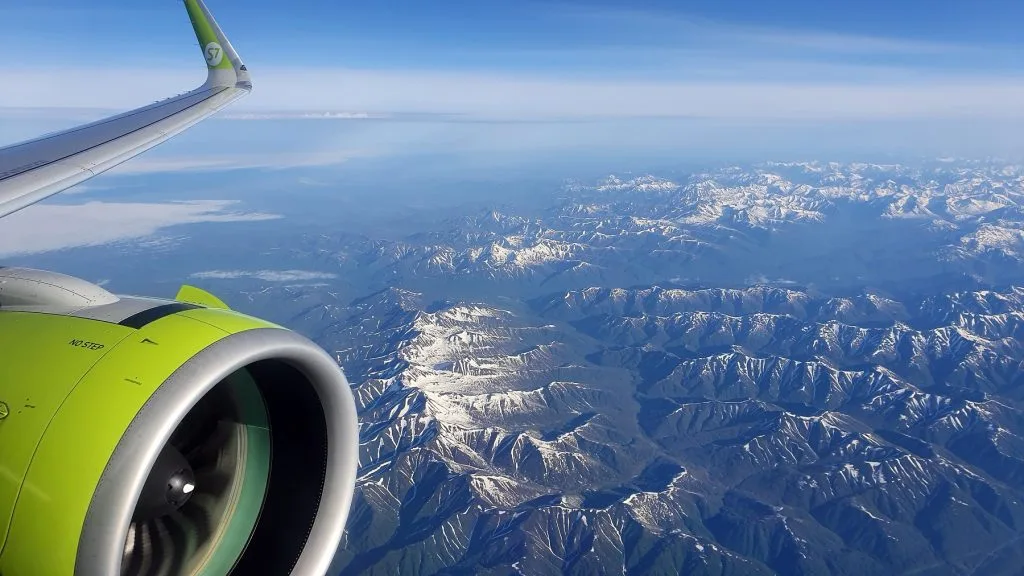
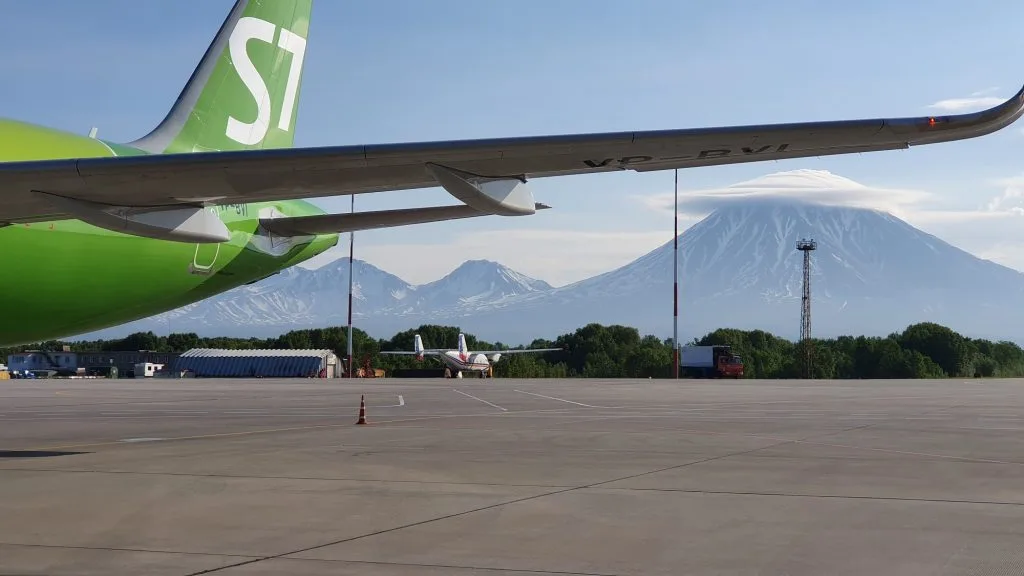
In the evening we flew to Petropavlovsk-Kamchatsky. If you fly with S7, I’m happy to tell you that in the regions they use the newest A320neo aircraft. With power outlets in the cabin and comfortable seats. Pay attention to the S7 app — very often, a few hours before departure, they offer an upgrade to business class. Sometimes a discount opens up afterward as well. Since the flights will be 3 hours or more, it’s worth considering this option.
Day 6.
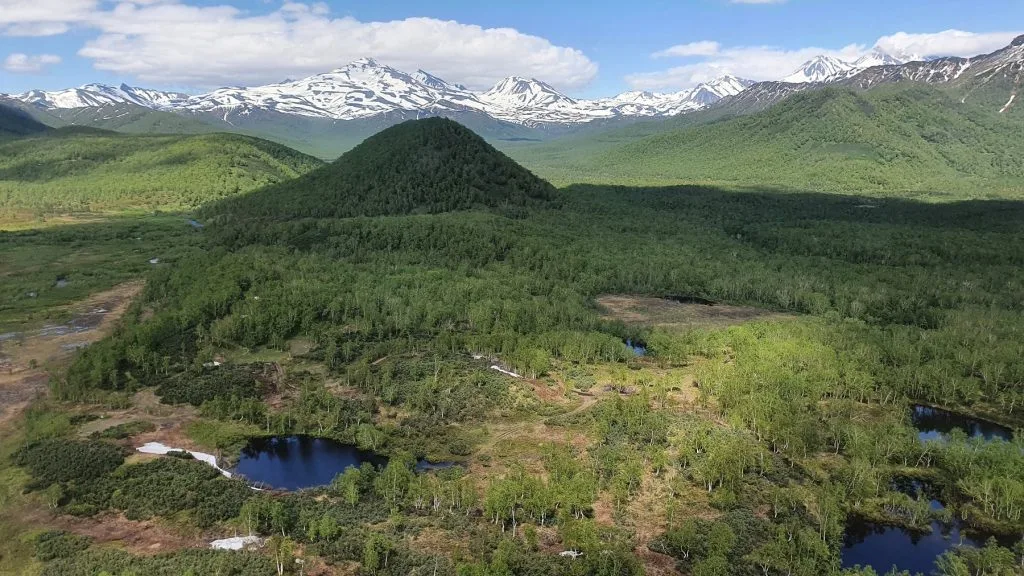
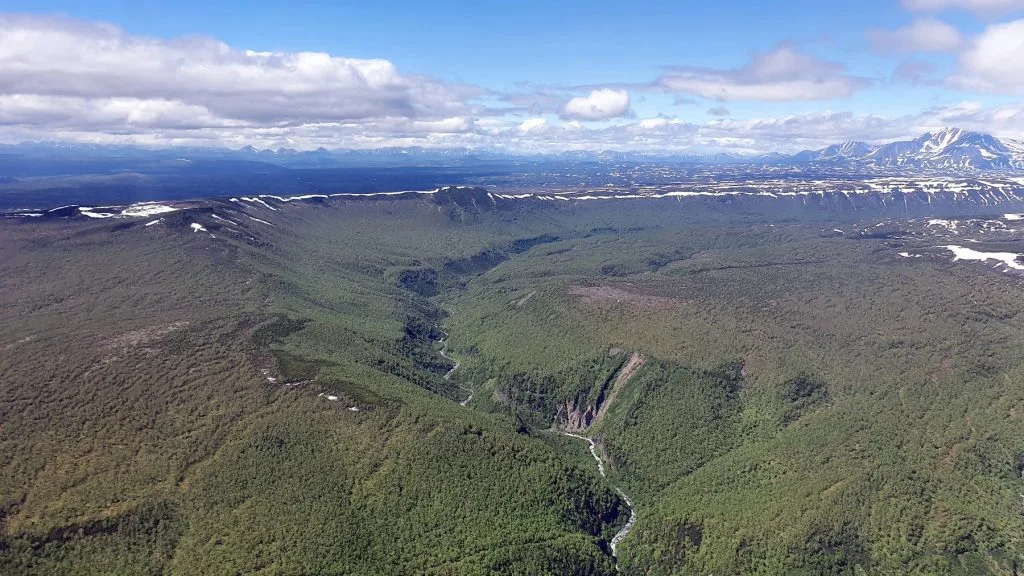
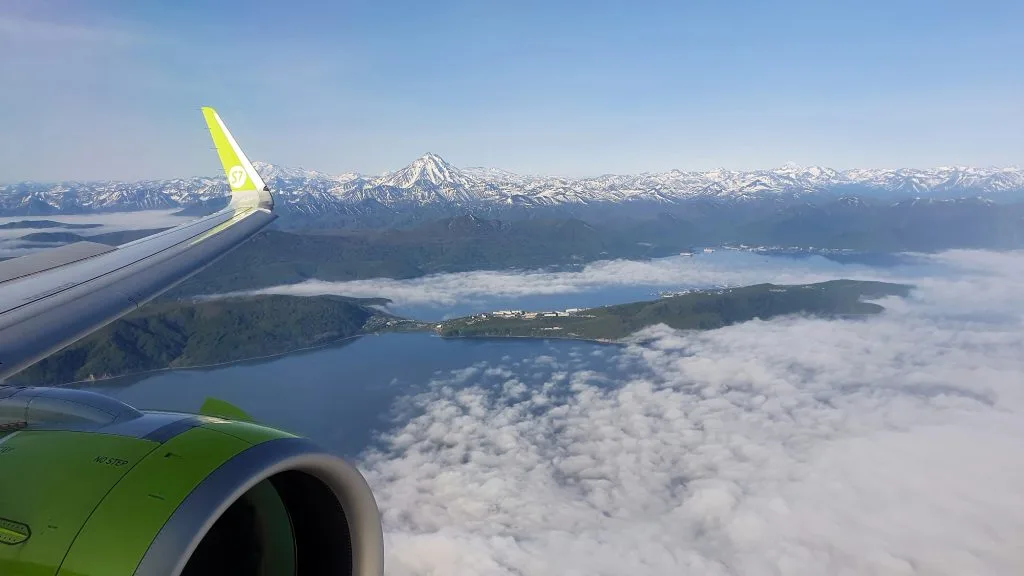
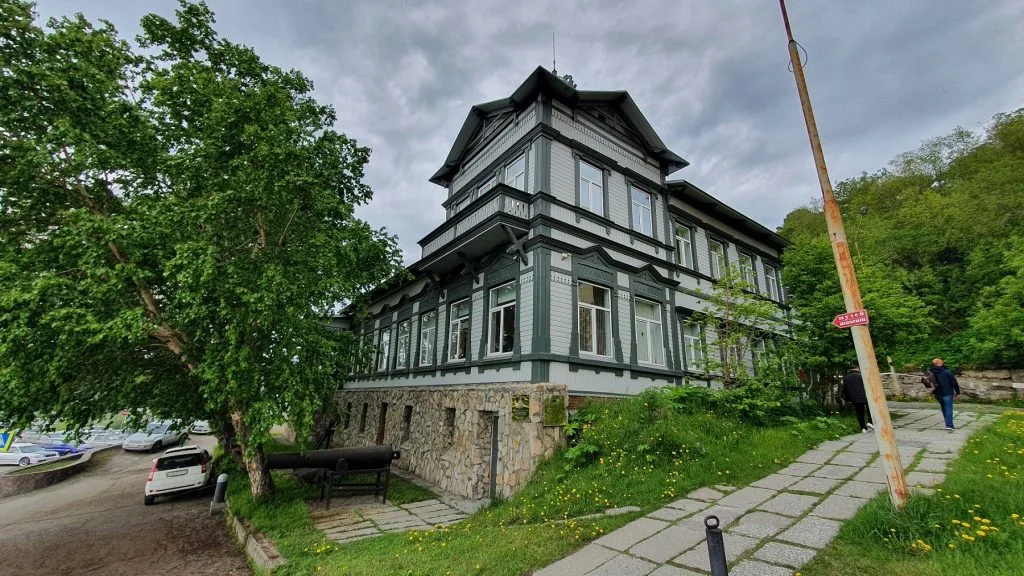
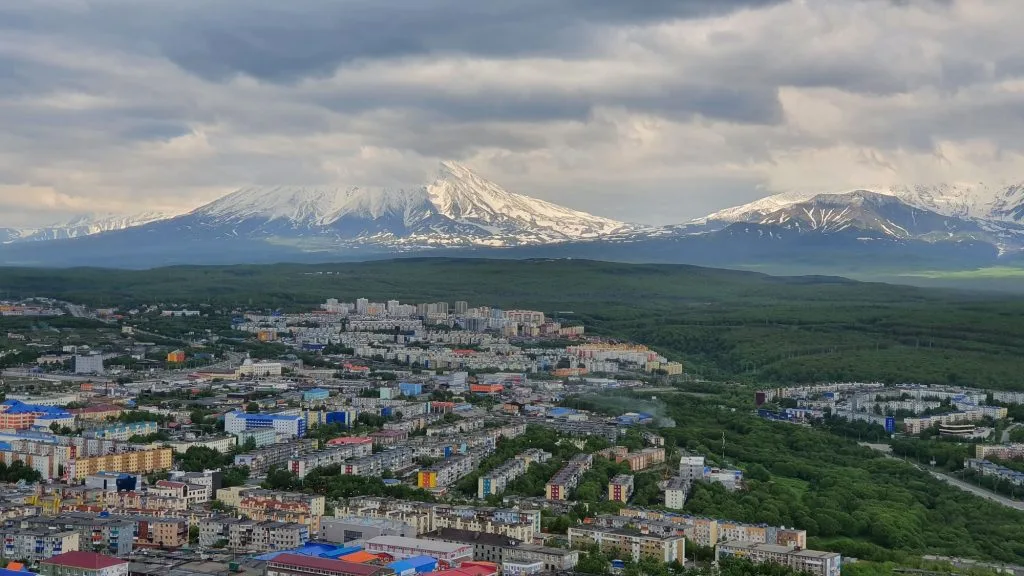
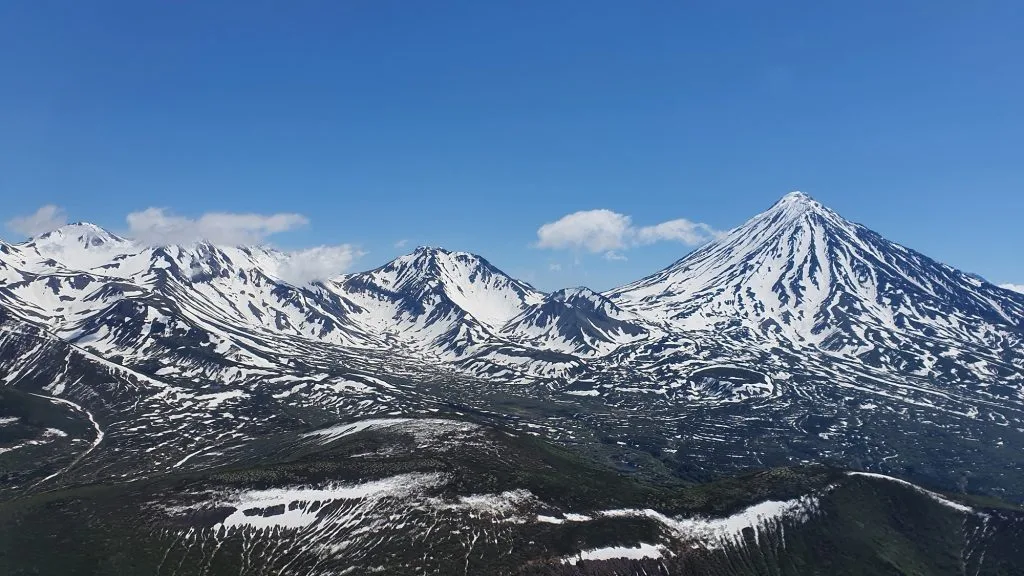
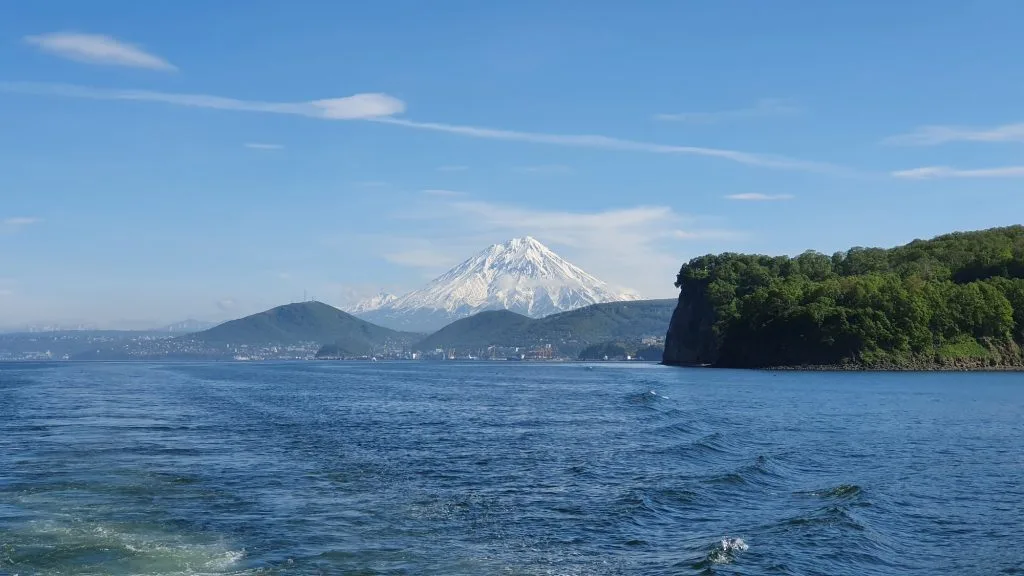
When flying to Petropavlovsk-Kamchatsky, you absolutely must catch the moment of approach to the peninsula: if it is light and the sky is clear, incredible landscapes will open up before you. Volcanoes are the main attraction of the Kamchatka Peninsula. Images of volcanoes appear on the flag and coat of arms of Kamchatka Krai, and they will also greet you as you approach the city. In total, there are more than 300 volcanoes in Kamchatka. From 28 to 36 are considered active or potentially active. The largest active volcanoes on the peninsula are Shiveluch, Klyuchevskaya, Ichinskaya, Koryakskaya, Avachinskaya, Karymskaya, and Kronotskaya Sopka. The volcanoes of Kamchatka are included in the UNESCO World Heritage list. So try to book a window seat and prepare your camera equipment — you are guaranteed an unforgettable impression.Petropavlovsk-Kamchatsky greeted us with sun and cool weather. Here we had to bundle up right away — a scarf and hat in July were just right. The city is small and spread out across the hills. There is no clearly defined center, but you can walk around the area of the central square and Naberezhnaya Street. The ethno-village located there is actually of no interest at all. As usual, we visited the Kamchatka Regional Museum of Local Lore. Since it is small, you shouldn’t allocate much time for it. But what else you can do is drive up one of the hills and photograph the city from above. As everywhere else, we got around by taxi. The only thing is that there is a specific local feature: Uber or Yandex.Taxi and similar services are not popular here. It will be practically impossible to catch or wait for a car. I recommend installing the inDriver app right away. At first it feels unusual, because in it you can bargain and raise your price if no one agrees to the amount you expect. But then you get used to it, and with this app we were able to get around the city and surrounding areas without any problems.
Day 7.
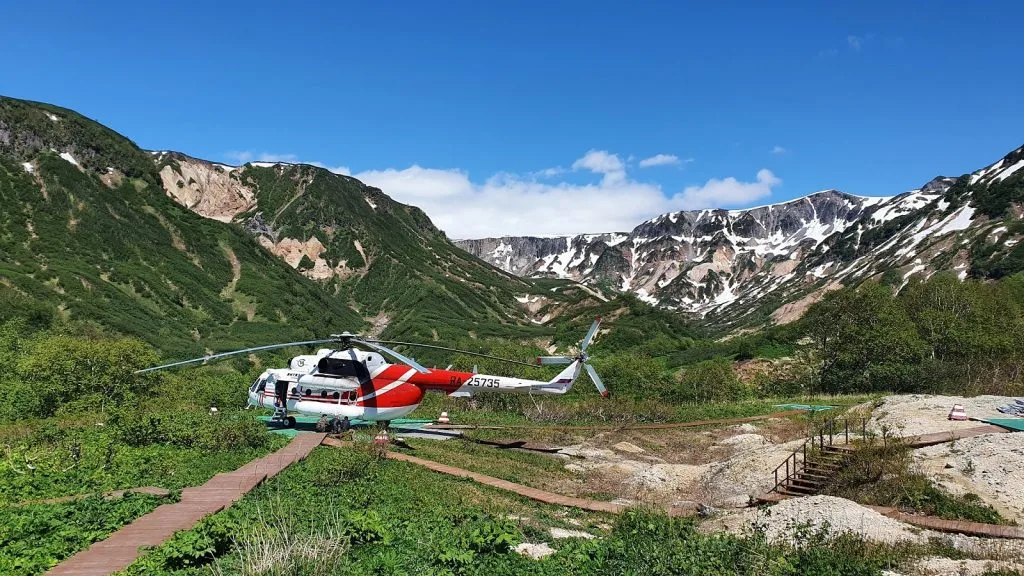
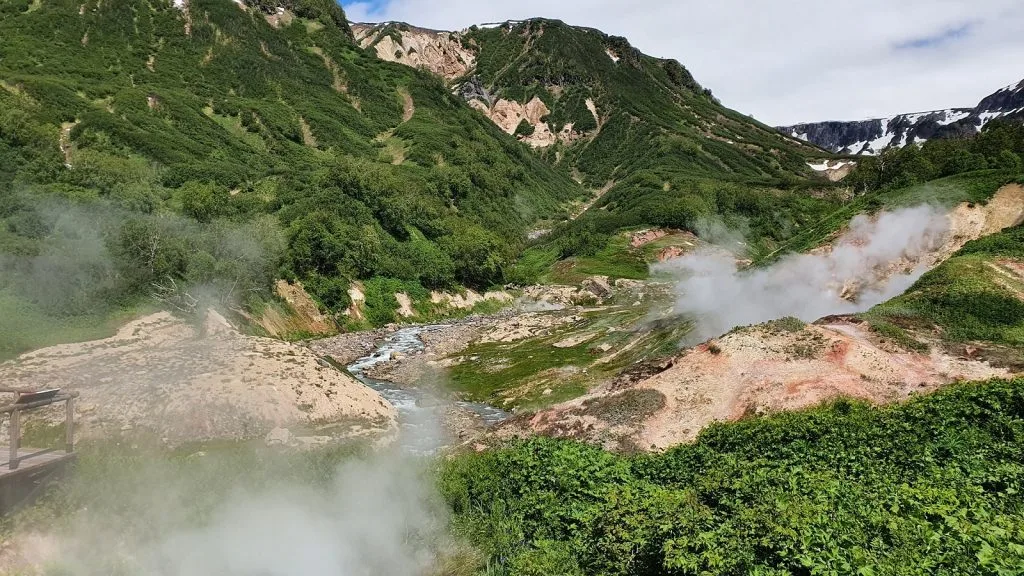
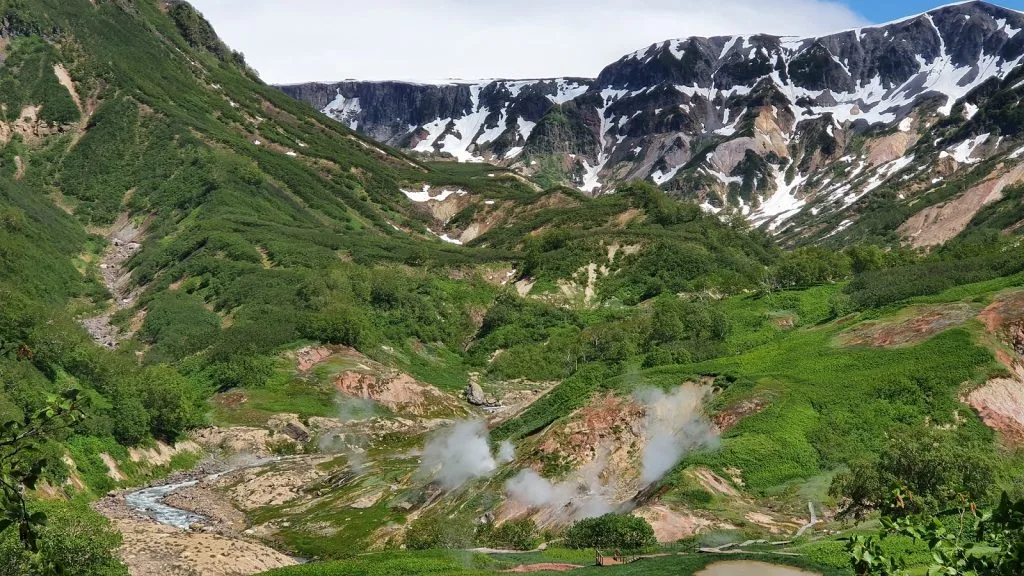
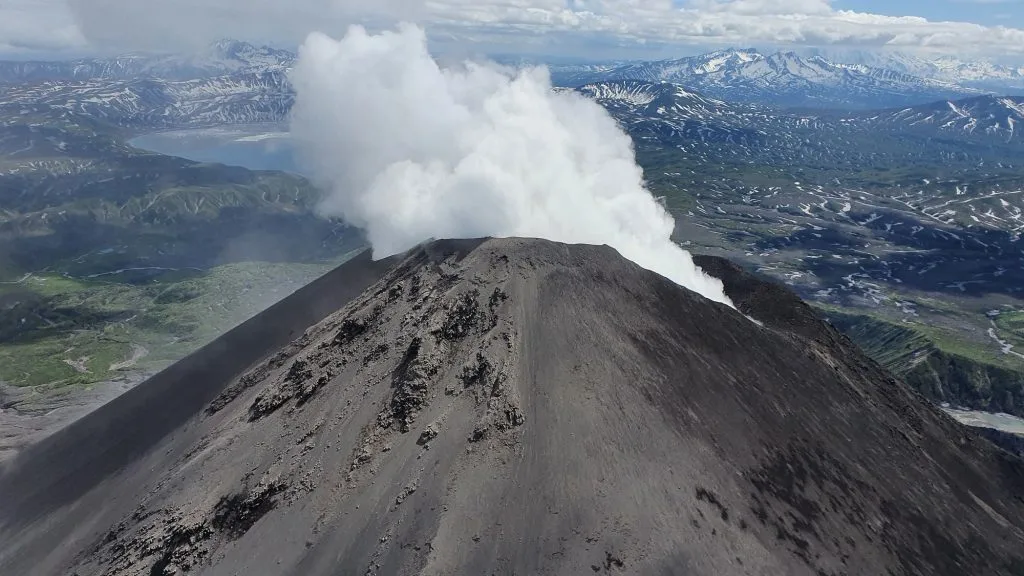
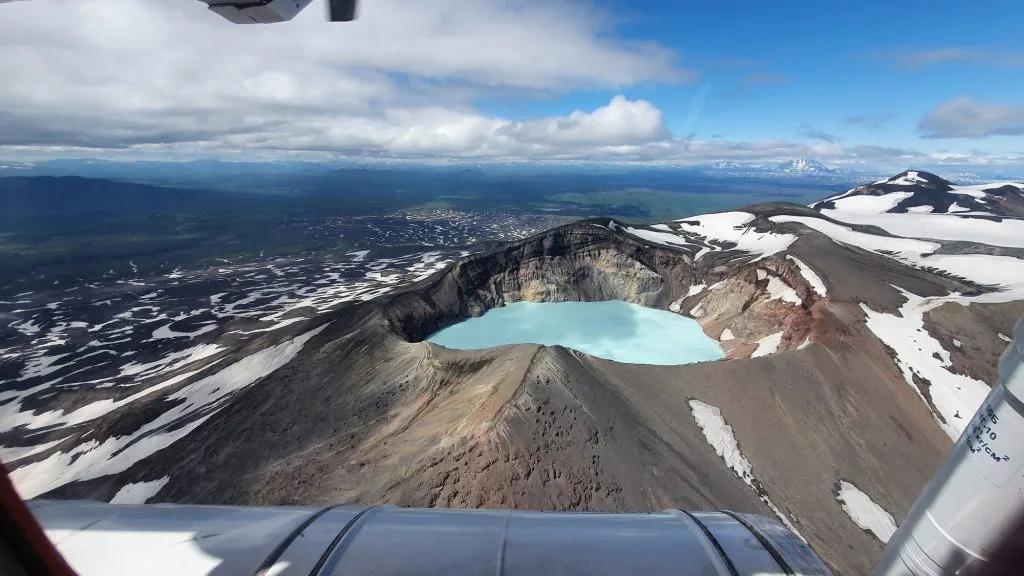
On this day we planned one of the most interesting activities, something that impressed us deeply and still hasn’t let go — a helicopter excursion over the volcanoes and to the Valley of Geysers. It is truly a vivid trip full of emotion and impressions. We took a group excursion (about 20 people) that included (depending on weather, whether the reserves were open, etc.) transfer from the city center to the heliport, a flight to the Valley of Geysers with a tour, an overflight of the Semyachik and Karymsky volcanoes, bathing in hot springs, lunch, the return flight, and transfer back to the city. We booked and organized everything through Vityaz-Aero and their travel service — https://vityaz.travel/catalog/heli. We also learned that you can charter a helicopter just for your own group, but that starts from 100,000 rubles per hour, which is of course expensive, though it can give much greater flexibility in planning.The helicopter excursion depends heavily on the weather, and we deliberately booked it for the first day so we would have some time in reserve if it was canceled or postponed. The organizers keep backup dates for the following days, so this service/option is also discussed in advance. In our group there was a girl who flies to Petropavlovsk-Kamchatsky on business trips, and she said this was her third attempt to fly out (the successful one), while before that the weather had always been unsuitable for flying. So you need to be prepared for that outcome too.The Vityaz-Aero heliport is modern, calm, and resembles a small airport. We checked in, boarded, and flew. I once flew in a helicopter as a child, but I no longer remember it. So I watched with interest and caught the sensations of the flight. I have to say, it wasn’t scary at all; fundamentally it’s no different from flying in a small plane, only takeoff and landing are unusual — you hover in place.The Mi-8 helicopter itself is not exactly big, but a group like that can travel quite comfortably in it, considering the longest flight is about an hour. Noise-isolating headphones are provided in the cabin. So there’s nothing to fear — you can fly with confidence.The first stop is the Valley of Geysers. The Valley of Geysers is one of the largest geyser fields in the world, located in the Kronotsky State Biosphere Reserve. It is a deep canyon of the Geysernaya River, whose slopes across an area of about 6 km² contain numerous geysers, hot springs, mud pots, thermal fields, waterfalls, and lakes. This limited territory has unusually high biodiversity and a strong contrast of natural conditions and microclimates. The Valley of Geysers is hard to access, and a protected regime operates there. Its ecosystem is unique for Russia and highly vulnerable to outside influence, so visitor access is strictly controlled — you may move only along special boardwalks and accompanied by staff. It is impossible to get there by any means other than helicopter.The second stop is the volcano overflight. Here you really just need to look, admire, and hope for good weather, since what and how much you see depends on the cloud cover. We were lucky and managed to see Maly Semyachik (1560 m) and Karymsky (1469 m).The third stop is the Nalychevo Valley, where you can bathe in natural hot springs. “Nalychevo” is a natural park on the Kamchatka Peninsula, created in 1995, and a cluster of the “Volcanoes of Kamchatka” natural park. The park covers about 287 thousand hectares. Its territory contains a large number of hot and cold mineral springs with healing properties. The plant and animal world of the park is very rich, and many species are listed in the Red Book.Here I should say that the bathing is rather peculiar — the water has some algae in it, though it is clear and hot. But there is nowhere to wash, only to change clothes. So not everyone will like this kind of bathing. Personally, I just took photos.Then according to plan we had lunch outdoors. By the way, I have no complaints at all about the organization of either the trip or the lunch — everything was excellent, very clear and well arranged. The food was actually quite good (airline-style meal trays), plus drinks and tea in thermoses. It was similar on the other Kamchatka excursions too — I was pleasantly surprised by the service.And here, by the way, we saw a bear! It was walking in the distance along the river and eyeing our group. Unfortunately, a phone camera can’t zoom that far, so the bear remained in my memory and as a small brown spot in the photo.
Day 8.
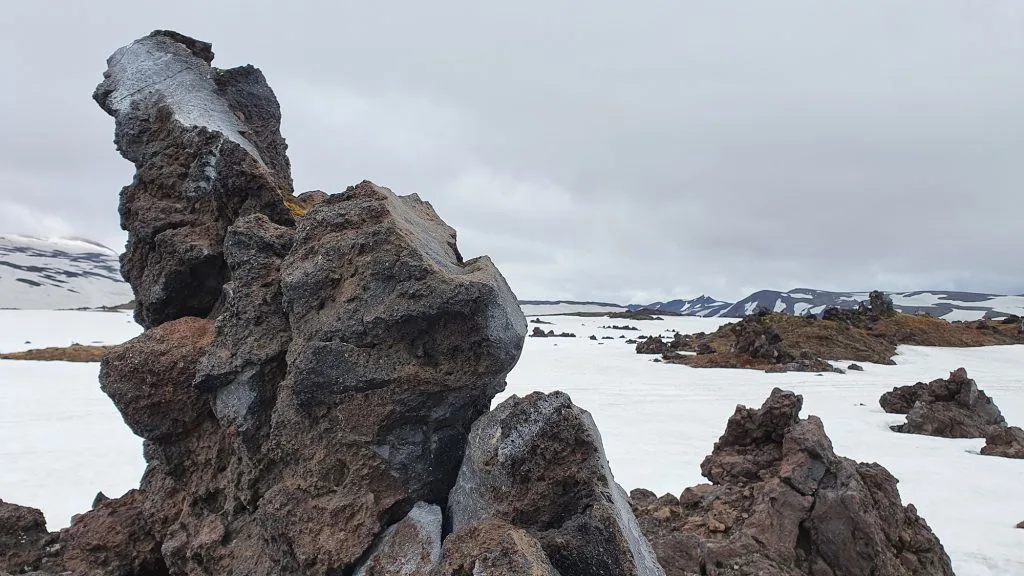
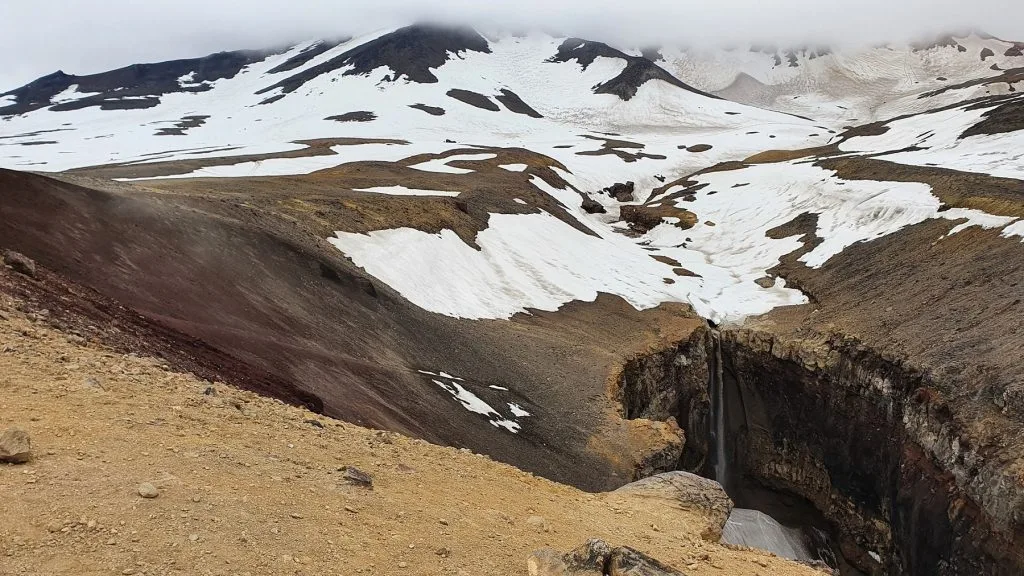
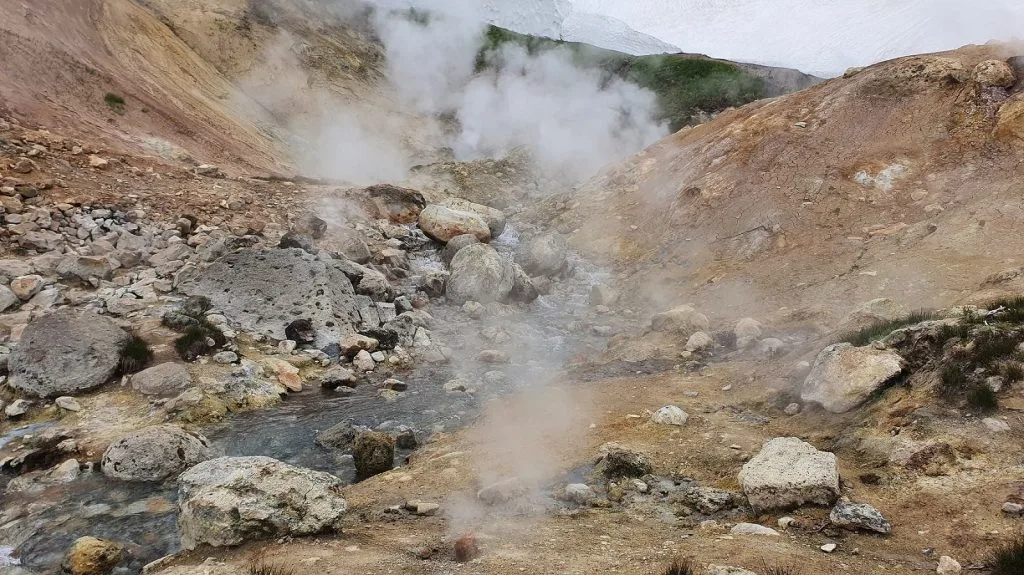
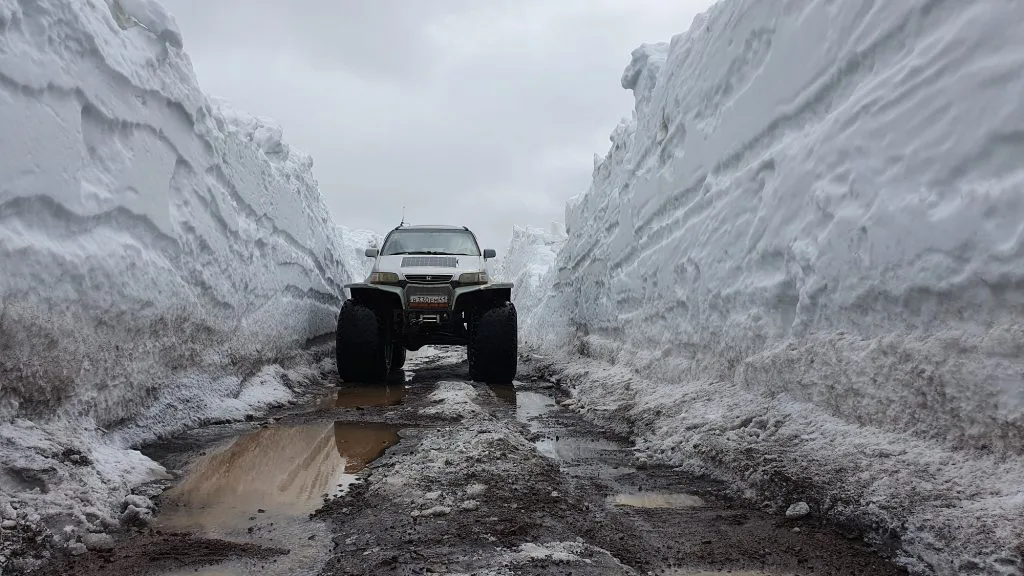
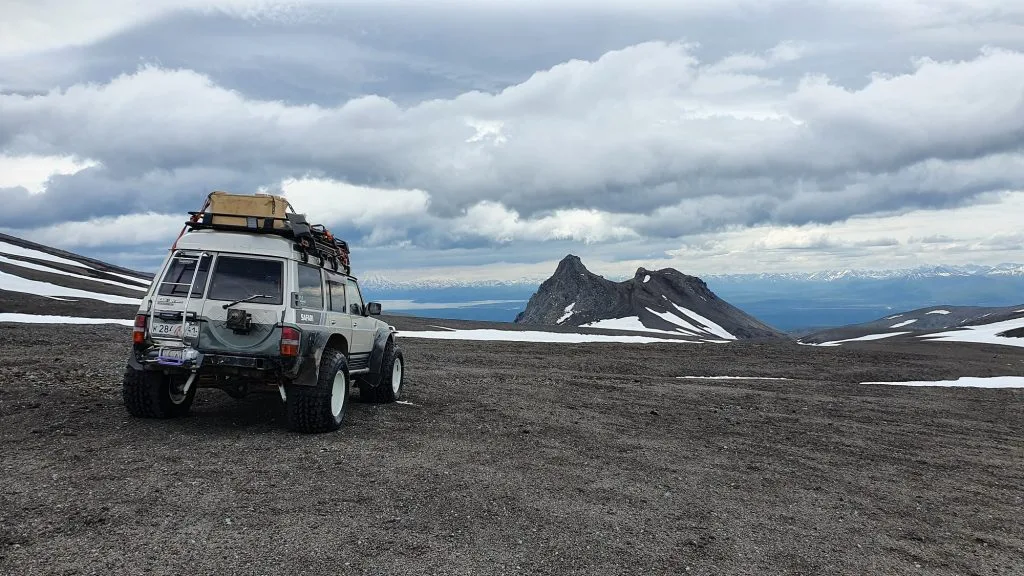
Since we had plenty of days, we decided to really explore the area. And here I should say that one of the most interesting entertainments besides helicopters is jeep safari to the volcanoes. Specifically in tall, specialized vehicles with huge wheels, special equipment, and all that sort of thing.For this day we booked an all-terrain trip to Gorely or Mutnovsky Volcano (they decide based on weather and cloud cover), and Opasny Canyon. We made the booking through the Vityaz-Aero website, which also offers various auto tours https://vityaz.travel/catalog/auto. On this trip we went with guide Alexander — www.instagram.com/svidleraleksandr.
Opasny Canyon lives up to its name. At first it seems not all that large and gets lost against the backdrop of the hillsides. In photographs you can’t see all its grandeur and scale. But standing beside it, you realize that slipping into it would be very easy indeed. So caution above all.
There in the mountains is also the small geyser valley. You can descend to it, but be careful — the temperature of the steam and outgoing water reaches 80 degrees.
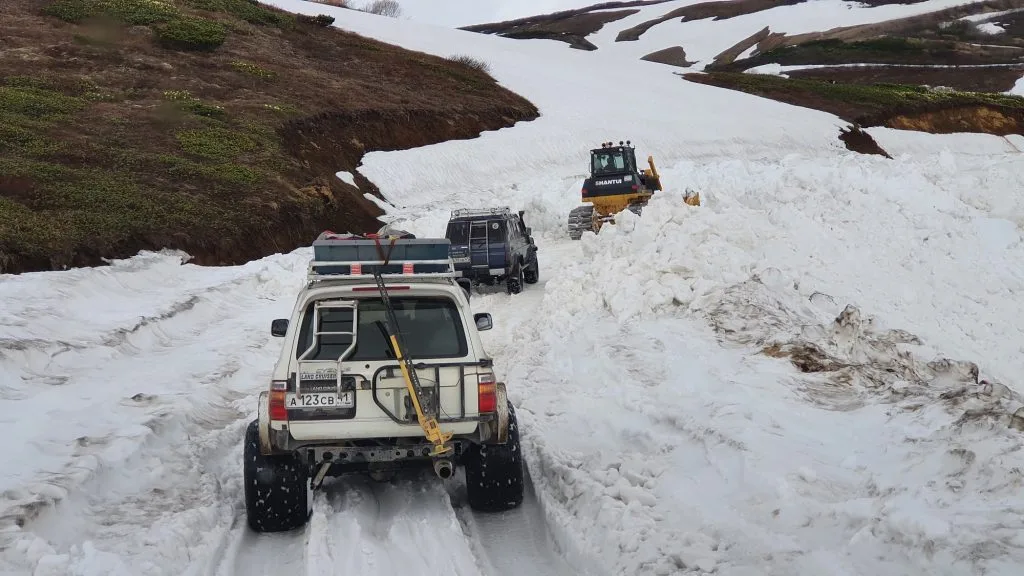
The impressions are, of course, magnificent — mountains, melting snow, volcano tops, and complete off-road wilderness! In places there was still snow, and you could see that graders had cleared literal tunnels through it. These tunnels were deeper than the height of a KamAZ truck, higher than a vehicle with a person. I had never seen anything like it. As the locals say, sometimes the snow piles up as high as the second or third floor of houses. The conditions are certainly harsh.
Day 9.
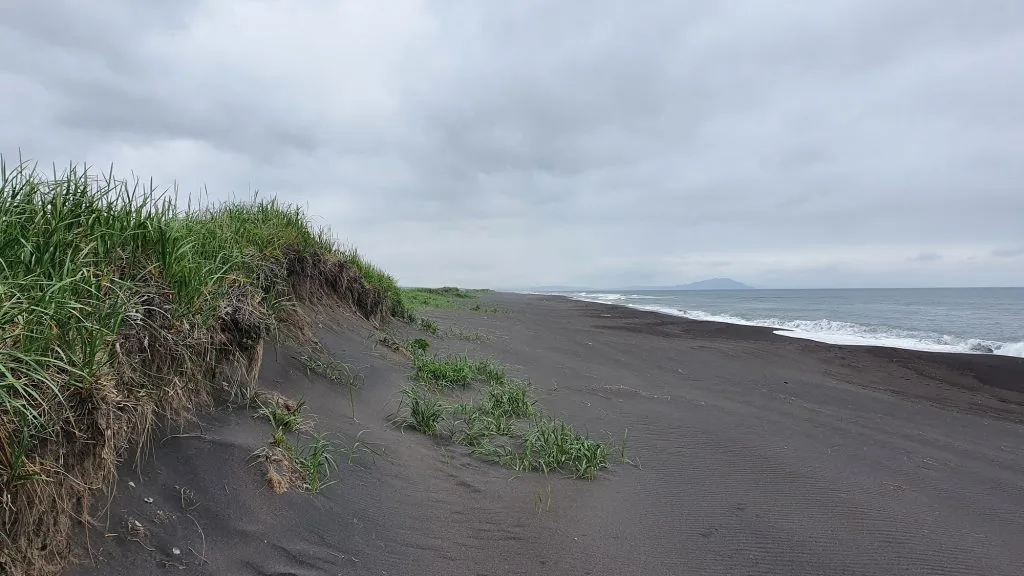
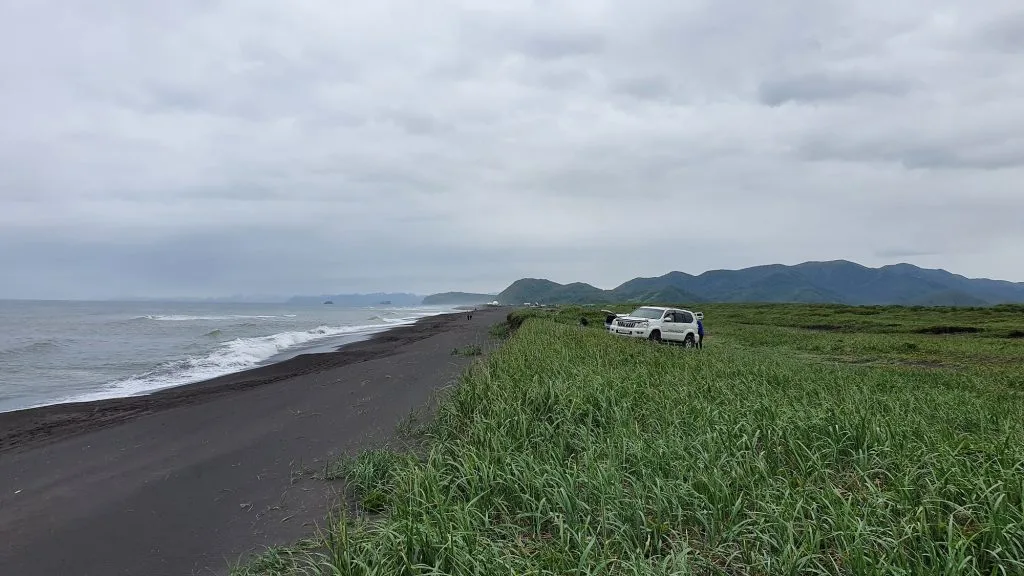
That day the weather turned bad. Fortunately, we had foreseen this in the forecast and planned a quiet rest in the apartment and dinner with fish soup (yes, we cooked it ourselves after buying fish at the market), but first we took a short taxi trip to Khalaktyrsky Beach. Well, harsh nature, a cold beach with dark volcanic sand, but many people had come for a picnic or a walk. It is upsetting that in such beautiful places such, I’m not afraid to say it, environmental disasters occur. I hope the authorities use every opportunity to do something about the chemical burial site and save nature.
Day 10.
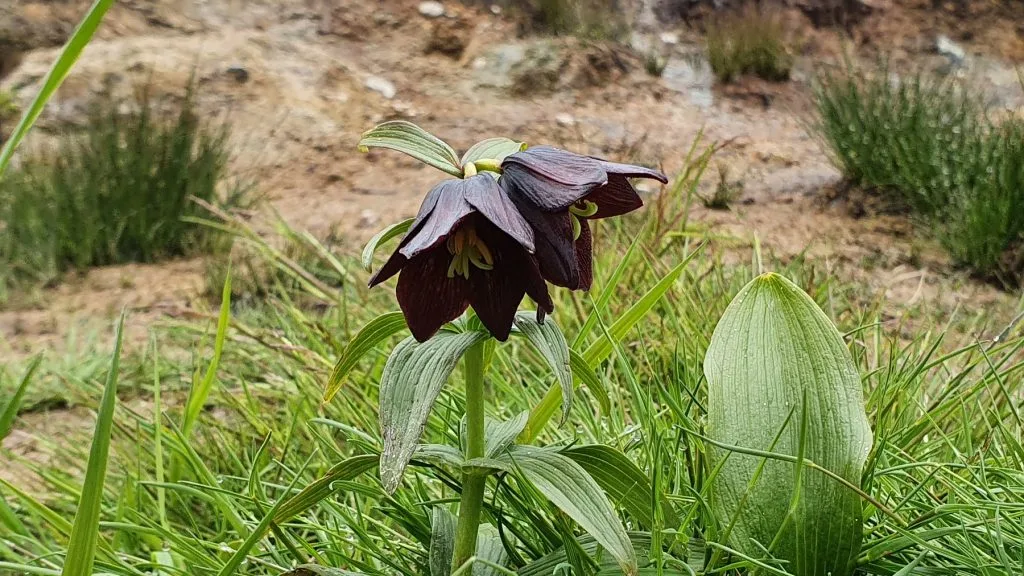
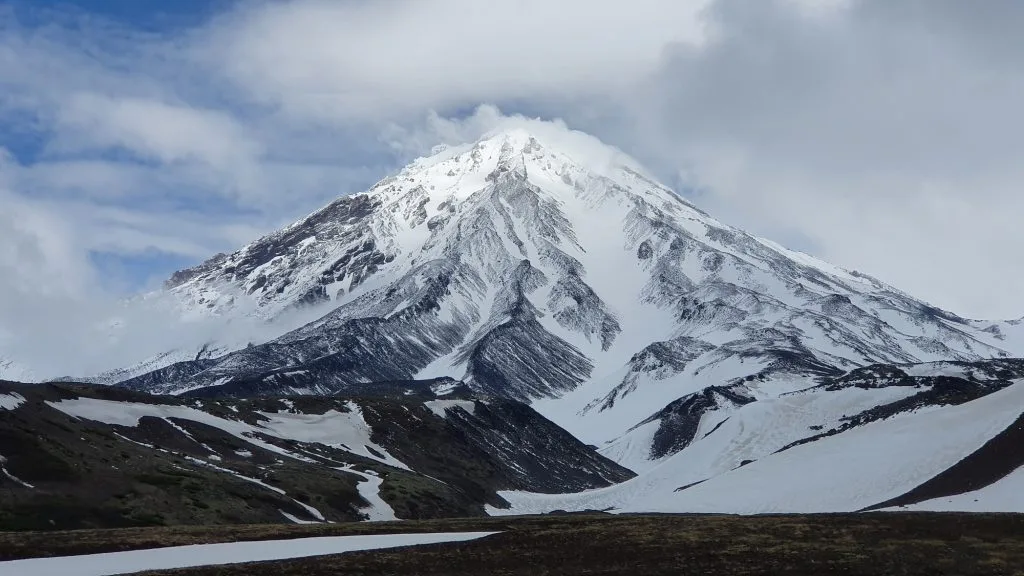
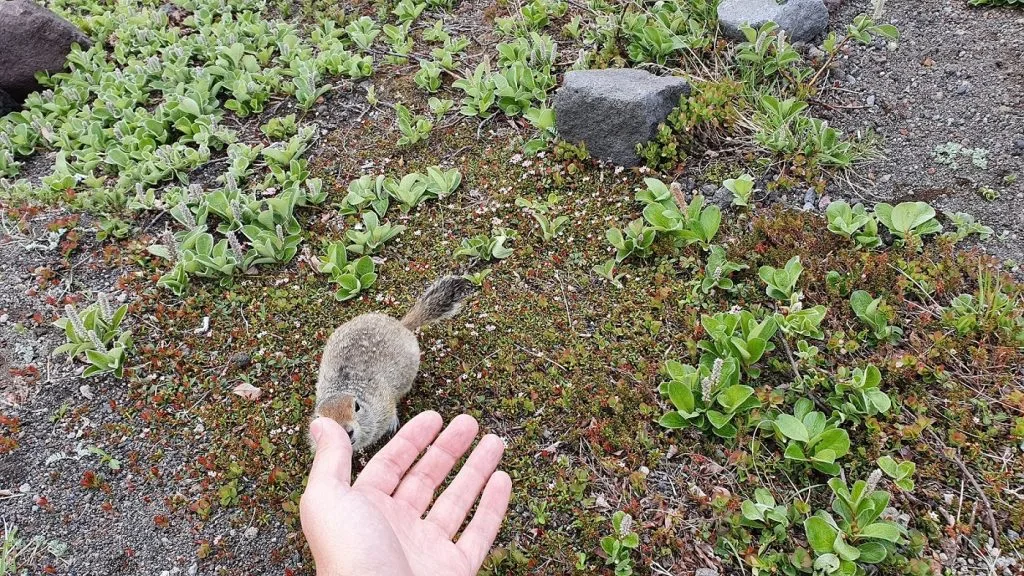
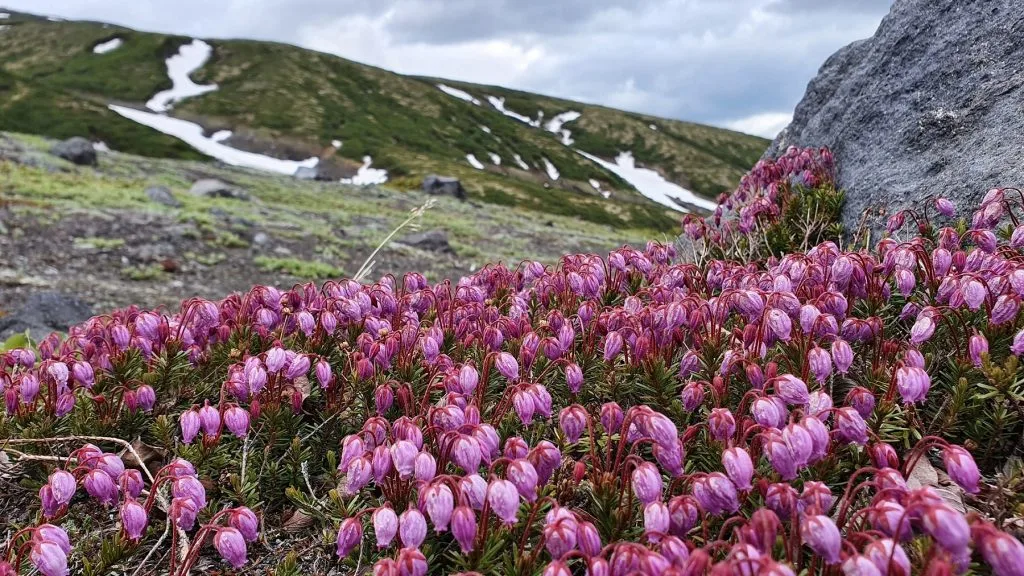
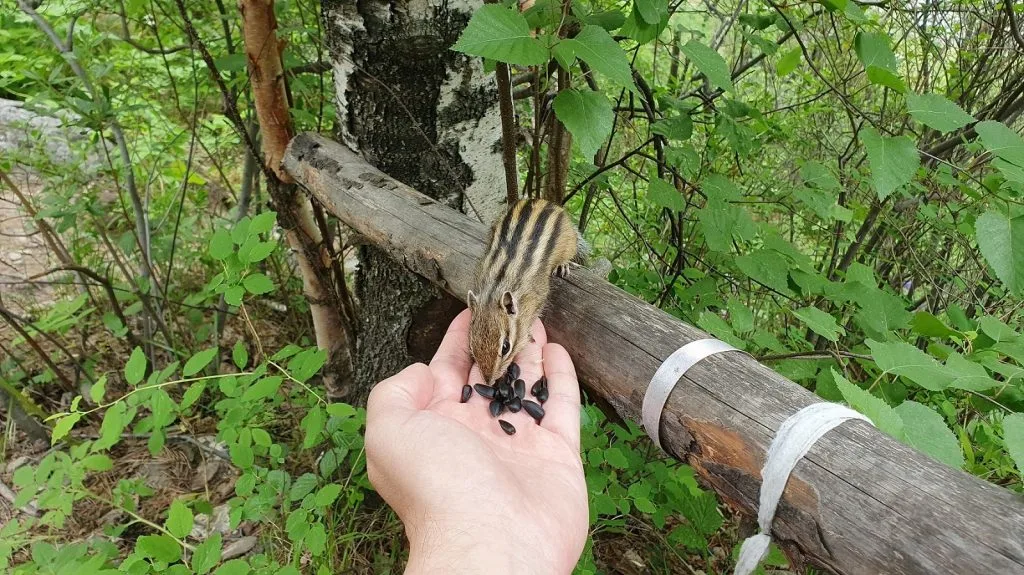
The second jeep tour — an all-terrain trip to Koryaksky and Avachinsky volcanoes, and Camel Mountain.These places lie lower than the previous mountains, so there was less snow and more flowers and fluffy evrazhki! Cute furry animals that happily run out begging for treats. Over time they get bolder and start shamelessly climbing into all the bags and backpacks.
Day 11.
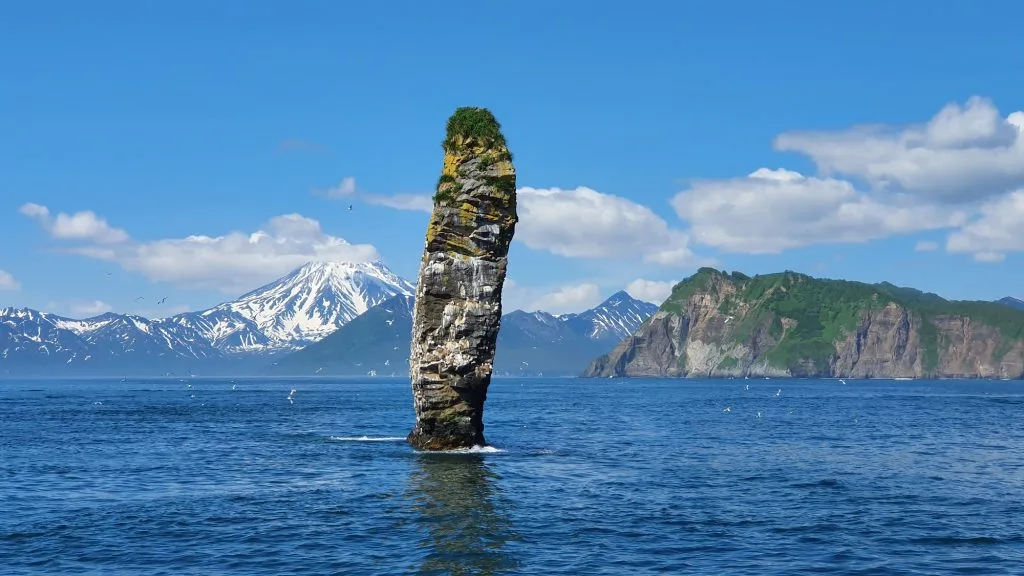
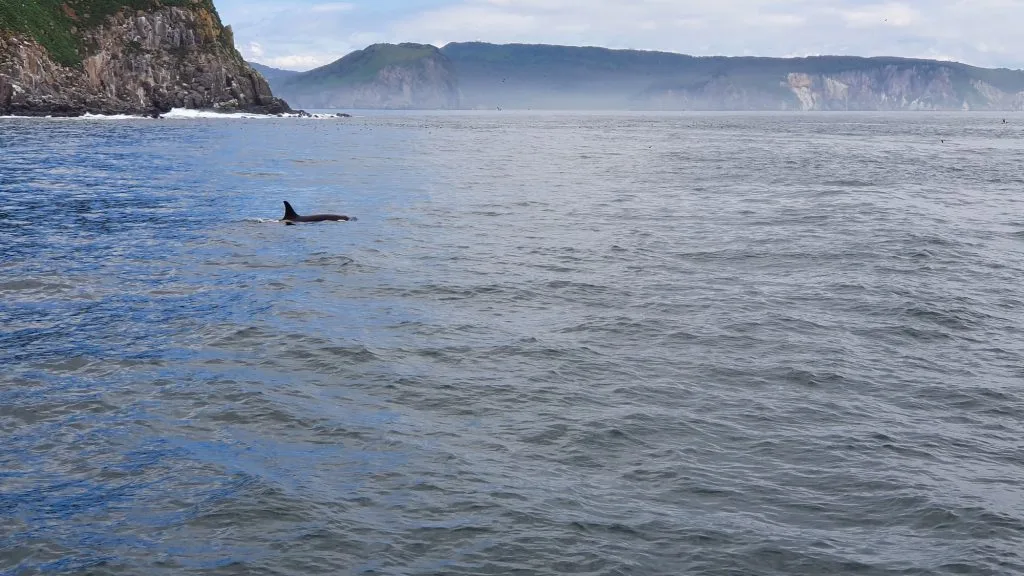
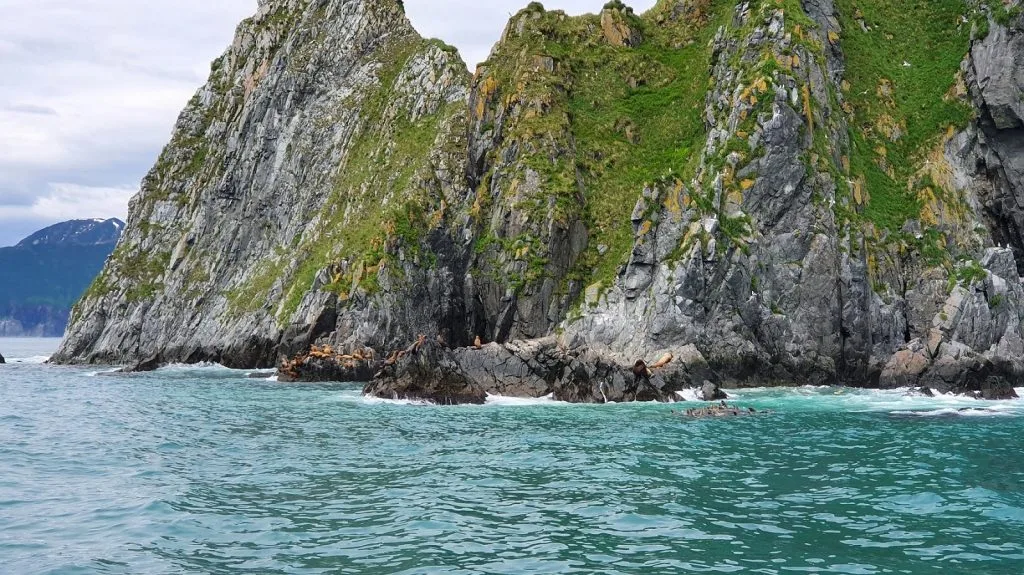
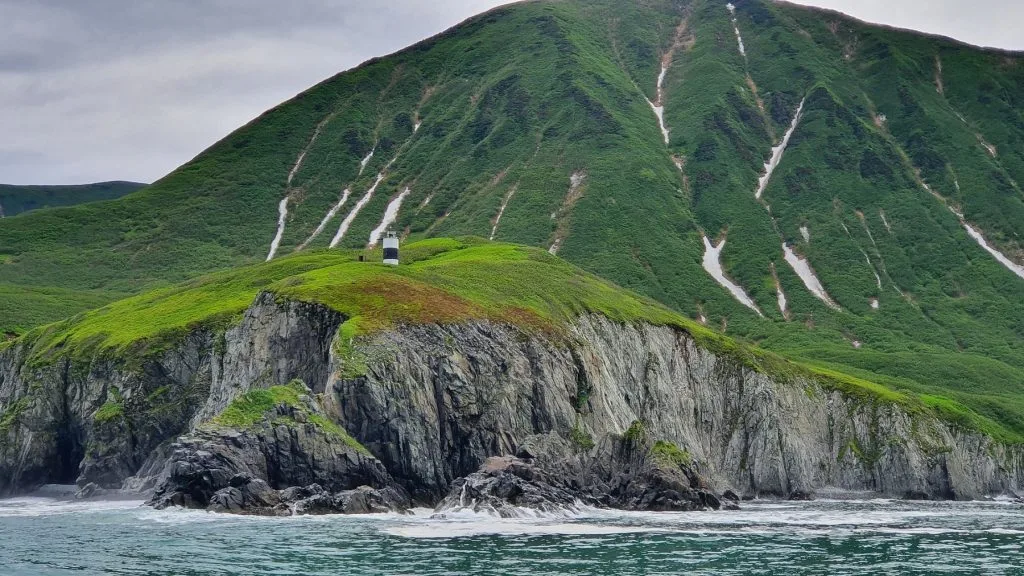
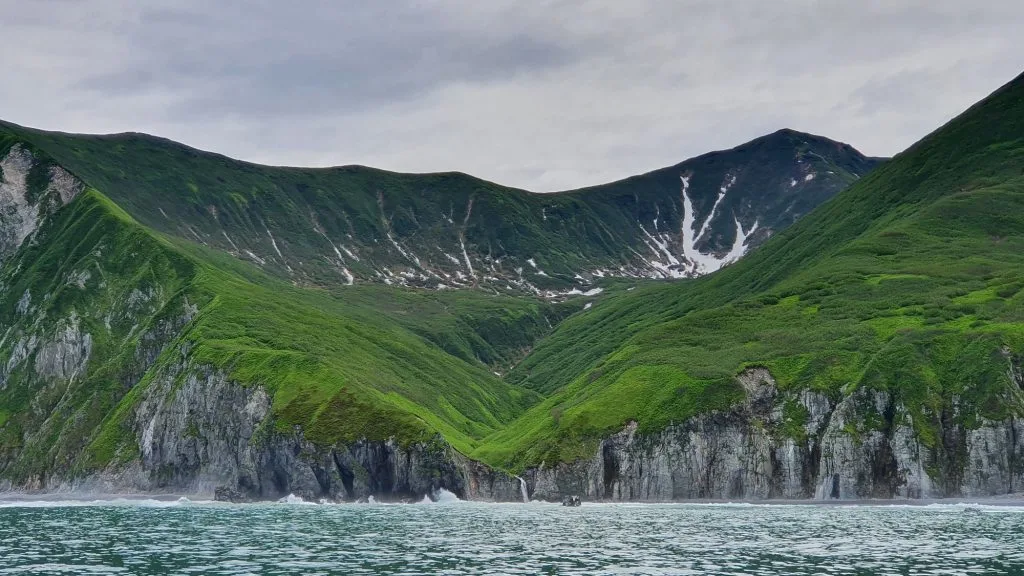
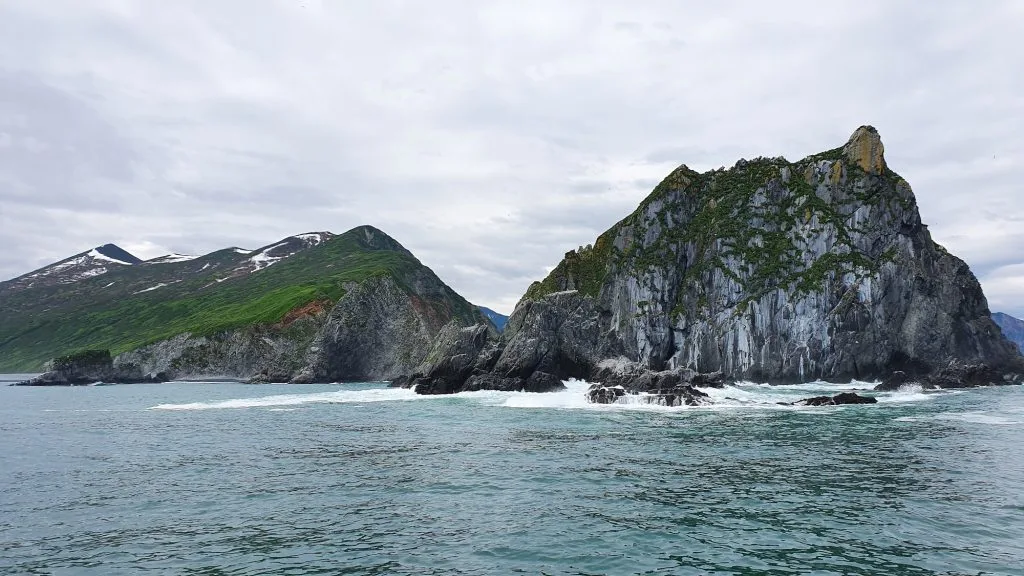
We devoted our last day in Kamchatka to a sea trip. We booked it here — www.suntravelkamchatka.ru.We were lucky with the weather — the boats went out to sea! Here it should be noted that the excursion to Russkaya Bay is very long, about 10–12 hours. So you need to be ready for a long ride over the waves. I also recommend bringing warm clothes, a hat, and gloves, because it is windy and cold at sea. But! It is worth it.And although the trip itself was leisurely, we were able to enjoy the winding coastline, sunny and cloudy weather, light and dark water. We saw flocks of birds nesting on unusual rocks. We went fishing.And then we met them — orcas! They were circling all around us, swimming, surfacing, and so on. Of course, photos do not convey such beauty.In the bay itself, we caught up with those we had really hoped to see there — Steller sea lions. When they noticed us, they began grumbling displeasedly and moving from rock to rock. We had disturbed their peace. They are, of course, huge… and there are so many of them there…On the way back you can enjoy real fjords. The landscapes are unique in their naturalness and beauty.
Day 12.
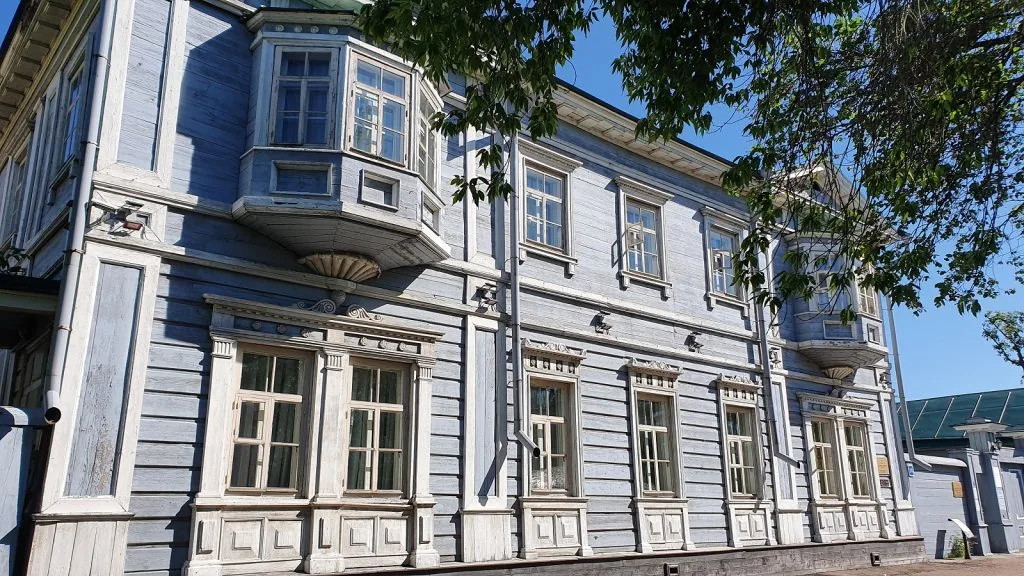
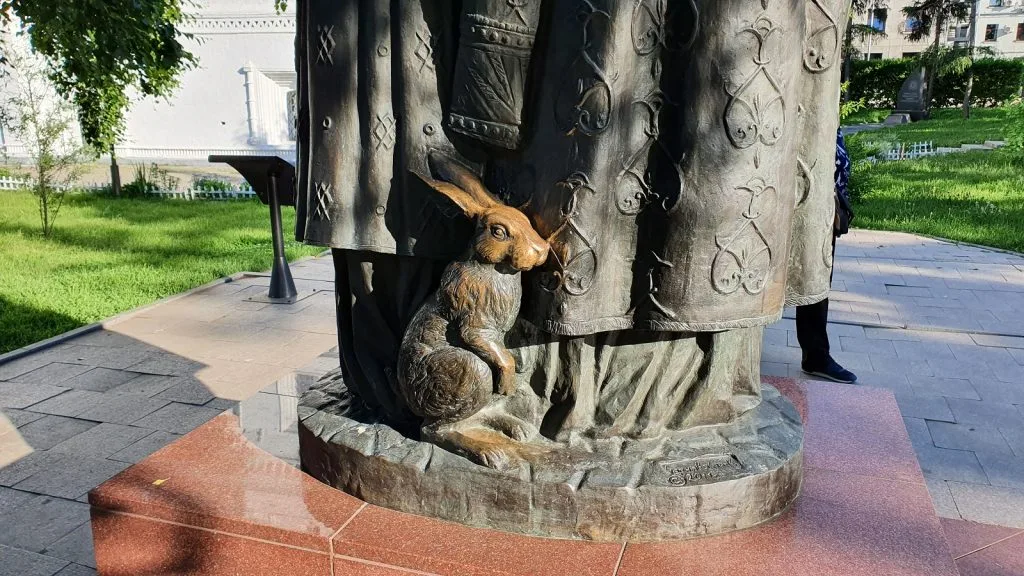
The next day we flew to Irkutsk. Because of the time difference, we arrived around lunchtime, checked in, and immediately went for a walk.Our first stop was the V.P. Sukachev Irkutsk Regional Art Museum, then we went to the Irkutsk Regional Decembrists Historical and Memorial Museum, located in the center of Irkutsk. The museum consists of two estates with memorial houses of Princes S.P. Trubetskoy and S.G. Volkonsky, opened in 1970 and 1985 respectively. We finished the day with a short city sightseeing tour with guide Natalia. We booked it through Tripster: https://experience.tripster.ru/experience/24388/.The main value of the city is its old wooden houses. The center has been largely preserved and in places restored.
Day 13.
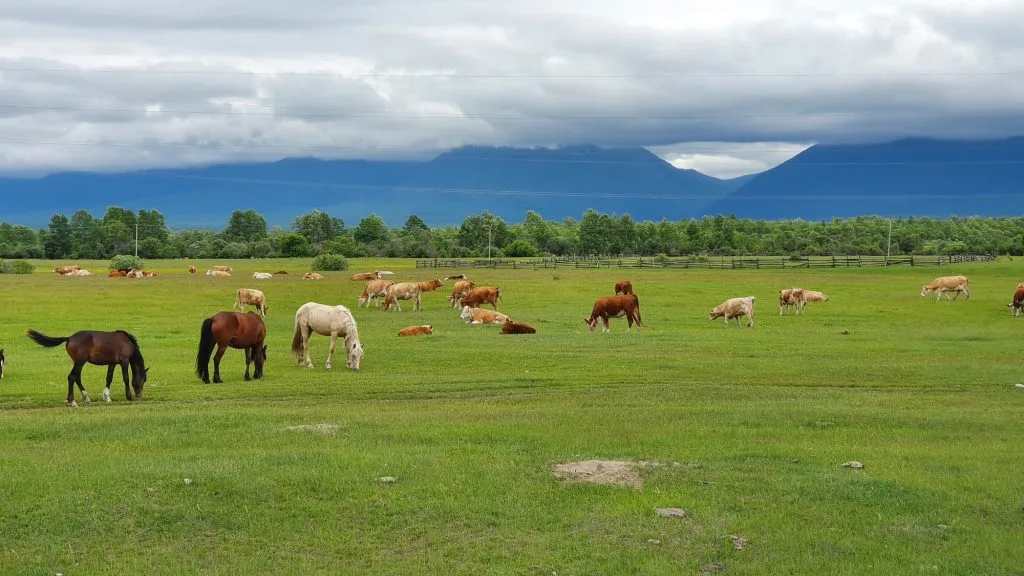
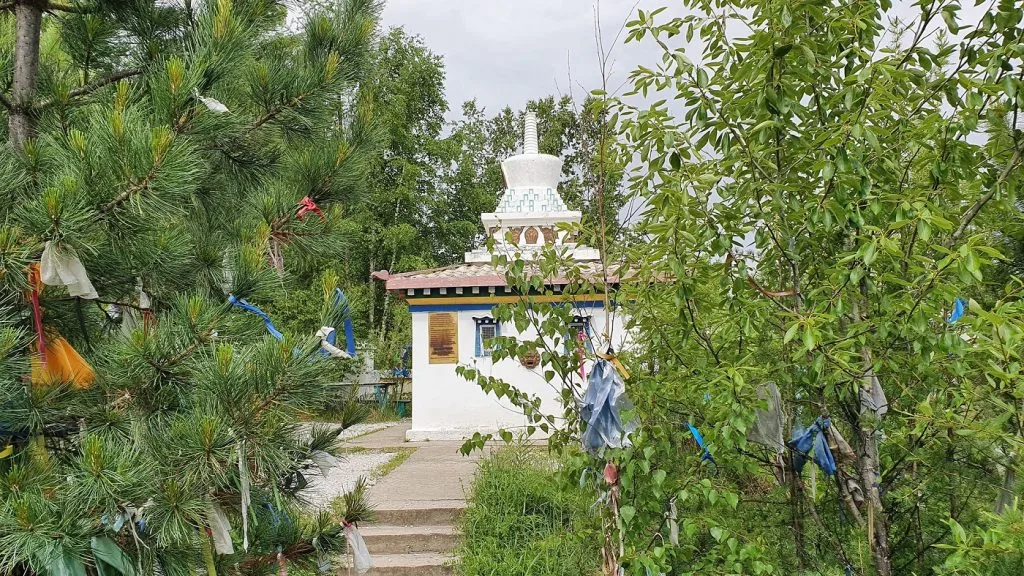
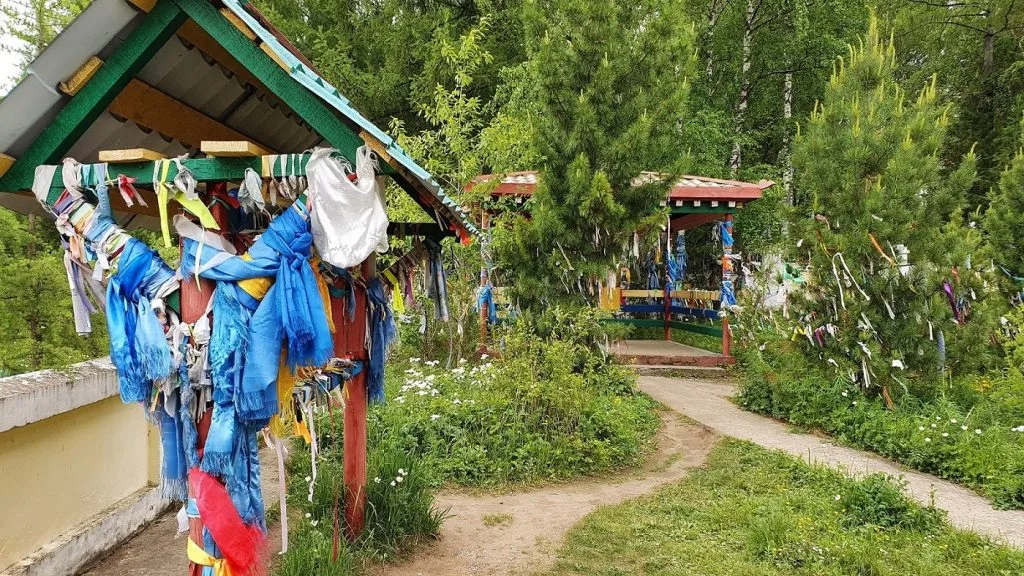
We devoted this day to a trip to Buryatia. We had long wanted to see these places, eat real buuzy, spin shaman drums, and see Buddhist temples. For this we took the excursion “One Day in Siberian Tibet” (Buryatia, Arshan) with guide Elena, also booked on Tripster: https://experience.tripster.ru/experience/23967/And indeed, we saw all of this in a calm, unhurried way. Buryat villages differ from ours — at first you don’t notice it, and then you realize that everything seems the same, but there are no vegetable gardens! Only pastures. It really is unusual.
Day 14.
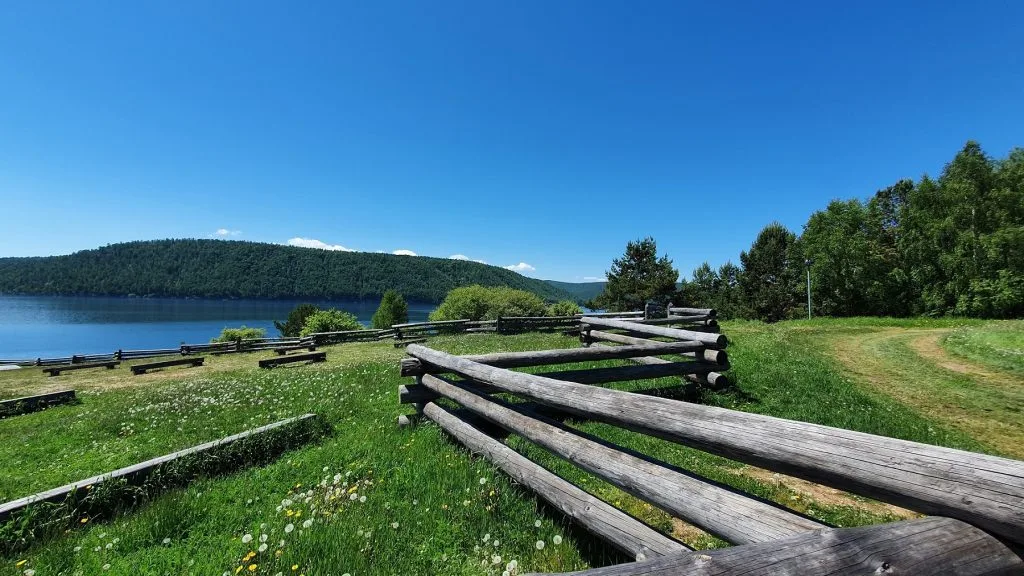
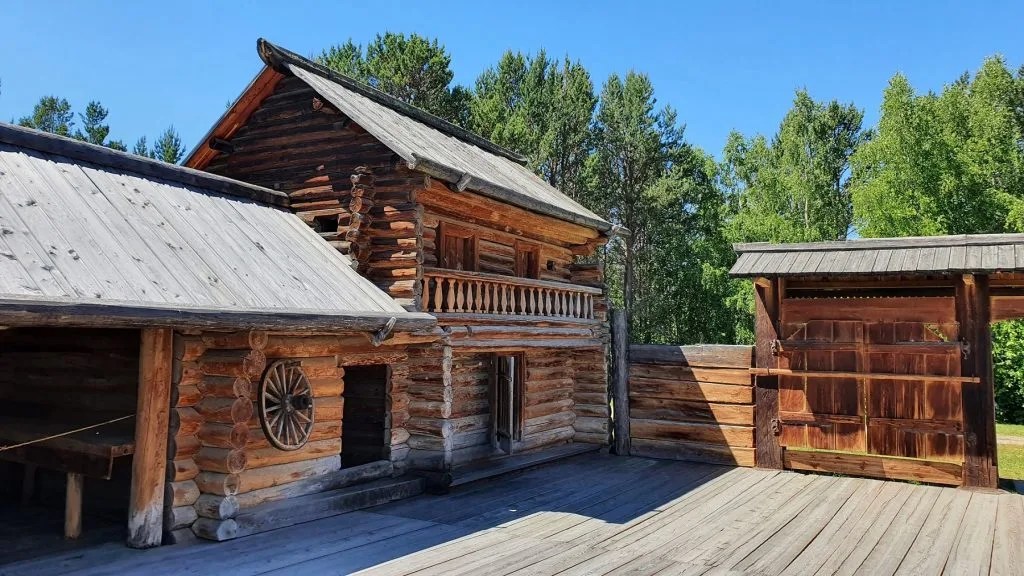
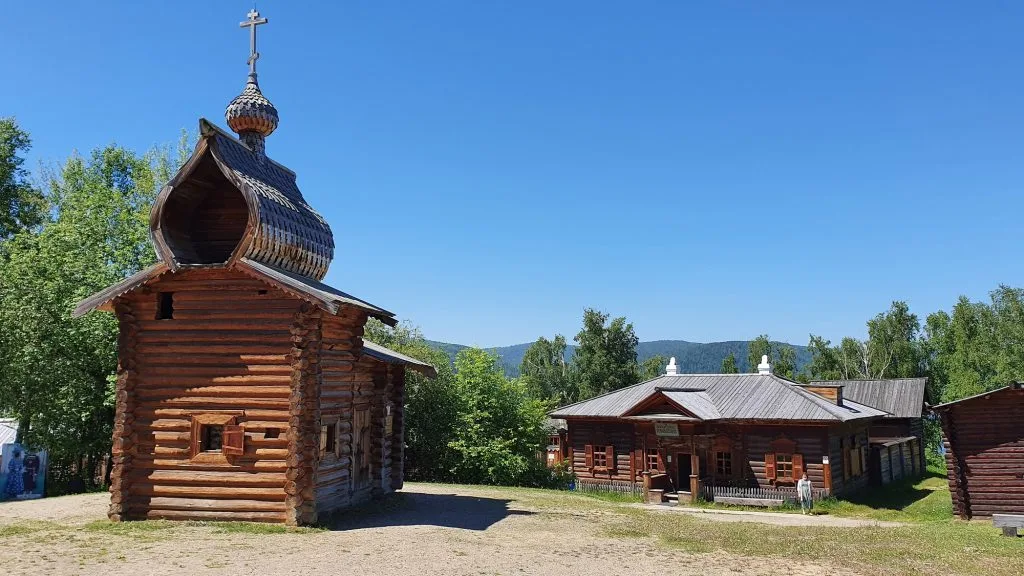
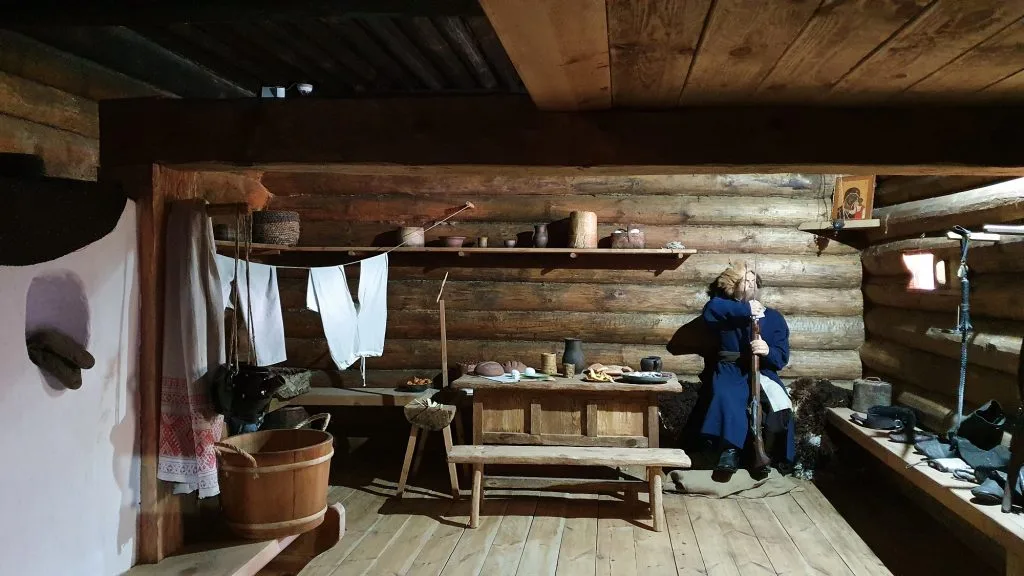
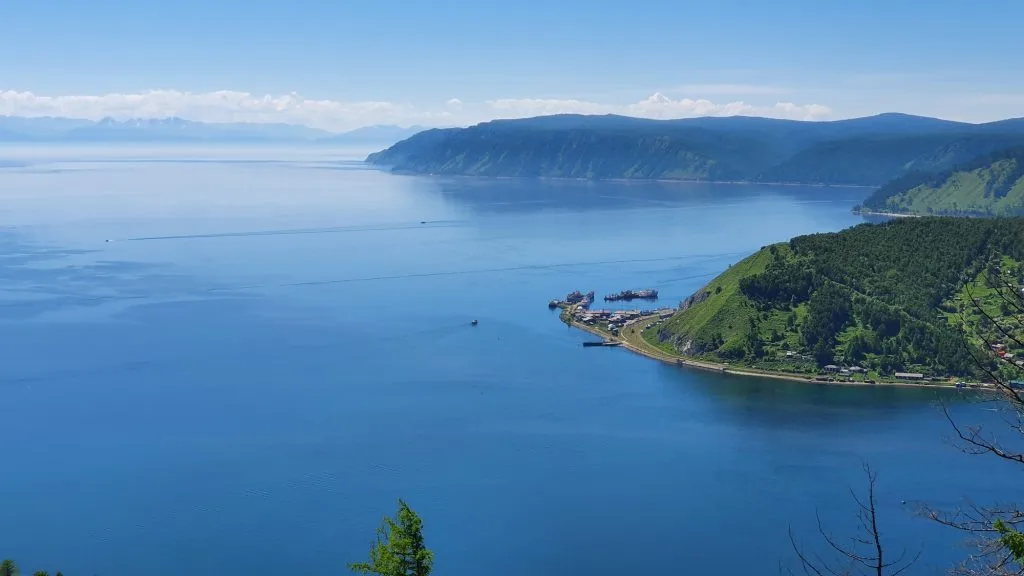
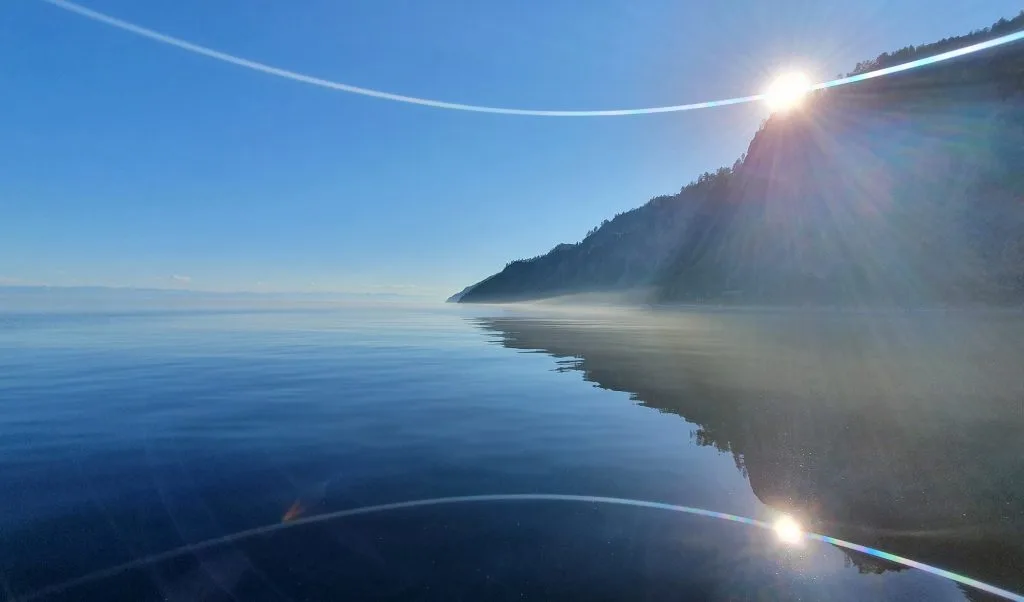
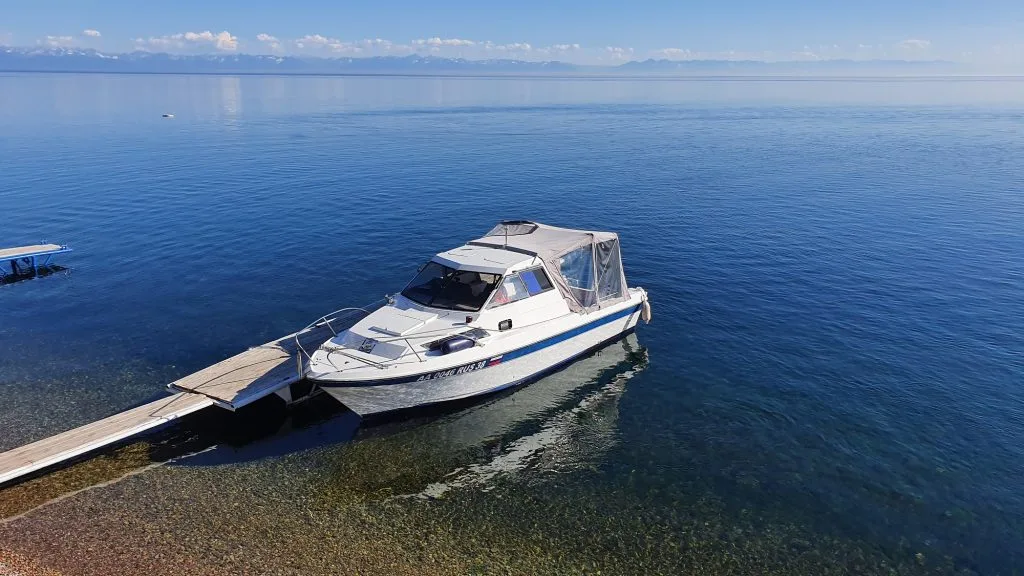
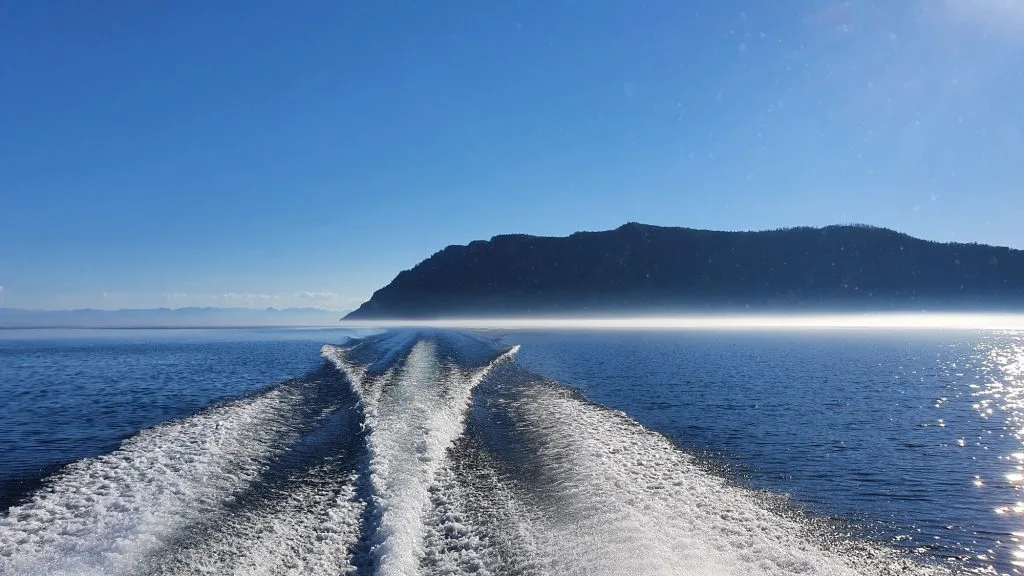
We dedicated the last day of our tour to Baikal. The excursion was “An Ideal Day on Baikal” (Taltsy Museum, Listvyanka, Chersky Stone, Baikal Museum, Shaman Stone). Guide Natalia, booked through Tripster: https://experience.tripster.ru/experience/23345/Our excursion began at the museum village of Taltsy. “Taltsy” is an Irkutsk architectural and ethnographic museum, a unique collection of monuments of history, architecture, and ethnography from the 17th to 20th centuries. The basis of the museum is the wooden buildings of small towns and villages of Irkutsk Oblast that fell into the flood zone during the construction of the cascade of hydroelectric plants on the Angara in the second half of the 20th century. The museum recreates four historical and cultural zones: Russian old-settler, Buryat, Evenki, and Tofalar. The southern wall of the wooden Ilim fort has been reconstructed, including the Great Spasskaya Gate Tower (built in 1667) and the Kazan Gate Church (built in 1697), both moved from the flooded town of Ilimsk.After the open-air museum, we drove along picturesque forest roads to the source of the Angara. It is an extraordinarily beautiful place with excellent panoramic views. On the Listvyanka side there is a mountain with a stunning view of the river’s source. An open chairlift leads there — we rode it up and then walked back down. In winter there is a ski slope there.Then we moved on to the settlement of Listvyanka, where we visited the Baikal Museum and got acquainted with the lake itself. Baikal (Buryat: Baigal Dalai) is a tectonic lake in the southern part of Eastern Siberia, the deepest lake on the planet, the largest natural reservoir of fresh water, and the largest freshwater lake on the continent by surface area. The lake stretches from southwest to northeast for 636 km in the shape of a giant crescent. Its width ranges from 24 to 79 km, and its maximum depth is 1,642 meters.Here I should say that this is far from an ordinary lake. First, it is very clean, and the water clarity reaches 40 m, so the bottom is visible as if in the palm of your hand. At the same time, the water is low in minerals and feels almost completely non-viscous.Second, it is very cold. Near the shore by August it may warm up to 14 degrees, but at depth it remains a constant 3–4 degrees. When we were there, the water temperature was about +8. Imagine: outside it is +28, the sun is blazing, we are hot, and then a light breeze from Baikal brings this cold. The sensation is strange — here is heat, and here is wild cold. Baikal pulls the warmth away. It feels as if you are standing in front of a giant refrigerator.Once there, we hired a boat and took a ride on the lake. Here I should note right away — make sure it is enclosed (at least with a canopy), otherwise it is very cold!But the beauty of the shoreline is worth it, and the lake itself in the distant haze gives the impression of the sea. Truly a wonder of nature.So that was the packed tour we ended up with. Impressed by Baikal, tired and happy, we returned to the hotel to rest, pack our suitcases, and head home.Of course, I cannot convey every moment, every interesting photo spot, every place that impressed me. I will say that I was not bored for a single day, that every day was very full, and in the evenings I collapsed and fell asleep like a log. I was very pleased with the trip. Excursion programs are well developed, and the local guys try to make them interesting and comfortable. They try to improve the service, and little things such as bottles of water to take along, organizing snacks and meals (including in hiking conditions), are done with heart and are genuinely pleasing. Everything is resolved quickly and clearly, and you can message/call everyone. There is progress in domestic tourism, and it is significant. And of course, the people left an impression too — smiling, friendly, and devoted to their region, ready to show it. You can see that they love it and are proud of it.Link to the full photo gallery.